Inside the Devin Ward Elder Wire Fraud Case
345 victims. 17 offerings. One hour.
Sentencing · December 16, 2026 · 9:00 AM CT—Days—Hrs—Min—SecThe wire fraud case against Devin Ward Elder: how he defrauded 345 investors of $66 million through DJE Texas Management Group, told through court filings, Elder's investor materials, and his social media.

§ 01 — Background
Who Is Devin Ward Elder?
The Man Behind DJE
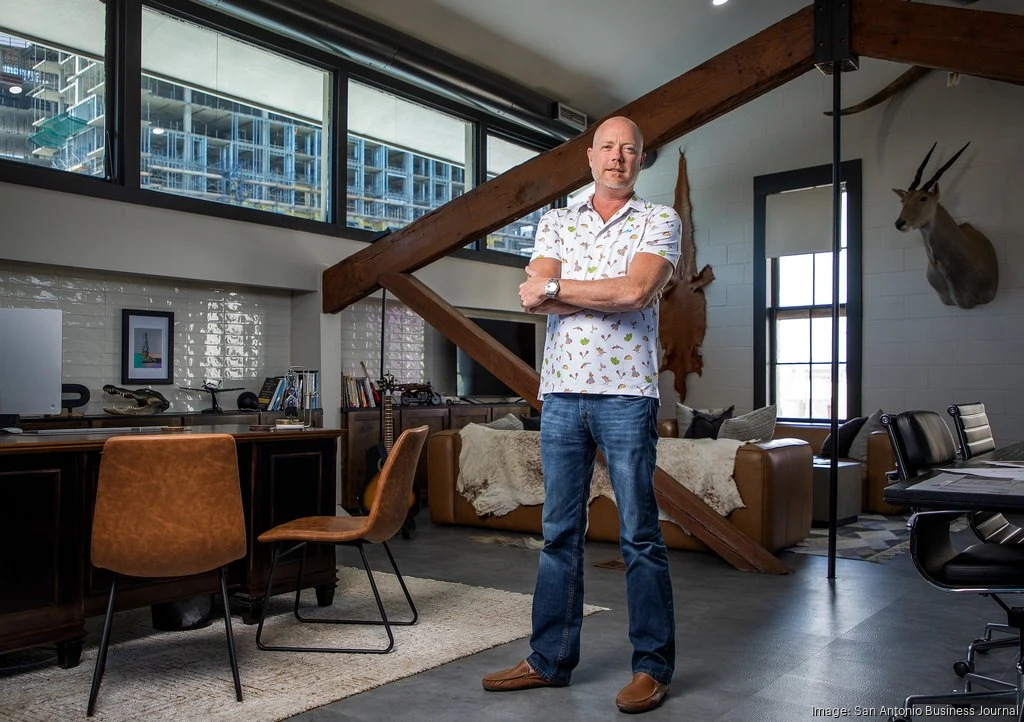
Devin Ward Elder, 47, grew up in difficult financial circumstances in San Antonio, Texas — by his own account, raised in a trailer and working part-time jobs like busing tables while pursuing his education. He later earned a six-figure salary in corporate roles at Rackspace Technology Inc. and 3M Co., before leaving to become a full-time real estate investor.
He founded DJE Texas Management Group, LLC in March 2015 and grew it into a firm controlling approximately 2,500 apartment units, flex industrial buildings, and thousands of acres of land across Texas. He valued his real estate empire at $400 million as recently as early 2025 — just before it all began to crumble.
Elder set a target of earning a "seven-figure annual income" and reaching $1 billion in assets under management, goals he discussed openly on real estate podcasts including the Action Academy podcast (January 2023) and the Helicopter Podcast (2024). He described himself as a successful entrepreneur who "owned and operated multiple businesses with both remarkable achievements and valuable lessons from humbling challenges."
Defendant Profile
| Full Name | Devin Ward Elder |
| Age at Indictment | 47 |
| Location | San Antonio, Texas |
| Company | DJE Texas Management Group, LLC |
| Company Founded | March 2015 |
| Role | Founder & CEO |
| Portfolio (Peak) | ~2,500 units + flex industrial + land |
| Self-Valued Portfolio | $400 million (early 2025) |
| Bank | Jefferson Bank, San Antonio, TX |
Case Information
| Case Number | 5:26-cr-00038-FB |
| Court | W.D. Texas, San Antonio Div. |
| Judge | Hon. Fred Biery |
| Charge | Wire Fraud — 18 U.S.C. § 1343 |
| Charged | January 28, 2026 |
| Guilty Plea | February 17, 2026 |
| Sentencing | December 16, 2026 · 9:00 AM CT |
| Investigating Agency | FBI (began Spring 2025) |
Exhibit: DJE Corporate Headquarters — 115 Camaron St.
DJE Corporate Headquarters — 115 Camaron St.
DJE's downtown San Antonio headquarters at 115 Camaron St. served as the registered address for Elder's entire network of shell companies. In May 2025, amid the liquidation process, DJE sold the building to Barton & Associates, a criminal defense law firm, which took out a $1.9 million loan from Frost Bank as part of the transaction.
The sale was brokered by Accelerated CRE's Tessa Martinez, whose brokerage is owned by R&D Real Estate, LLC — an entity tied to Elder and associate Ruben Dominguez. Some investors raised concerns about a potential conflict of interest in the transaction. Elder had already stepped down as DJE manager in April 2025 after hiring Max Wayman & Associates to wind down the business.
§ 02 — The Lifestyle
Funded by
Investor Money
While investors waited for promised returns, Elder used their funds to finance a lavish personal lifestyle — including a private plane, a custom helicopter, ranches, livestock, and a beachfront vacation home.


Personal Assets & Lifestyle
Elder openly described his lifestyle on real estate podcasts, boasting of owning a private plane and helicopter — both of which he learned to pilot. He used the helicopter to take his friends coyote-hunting at his ranches.
On the Helicopter Podcast in 2024, Elder explained his philosophy: he was a big fan of finding a "business excuse to pay for whatever it is you want to do."
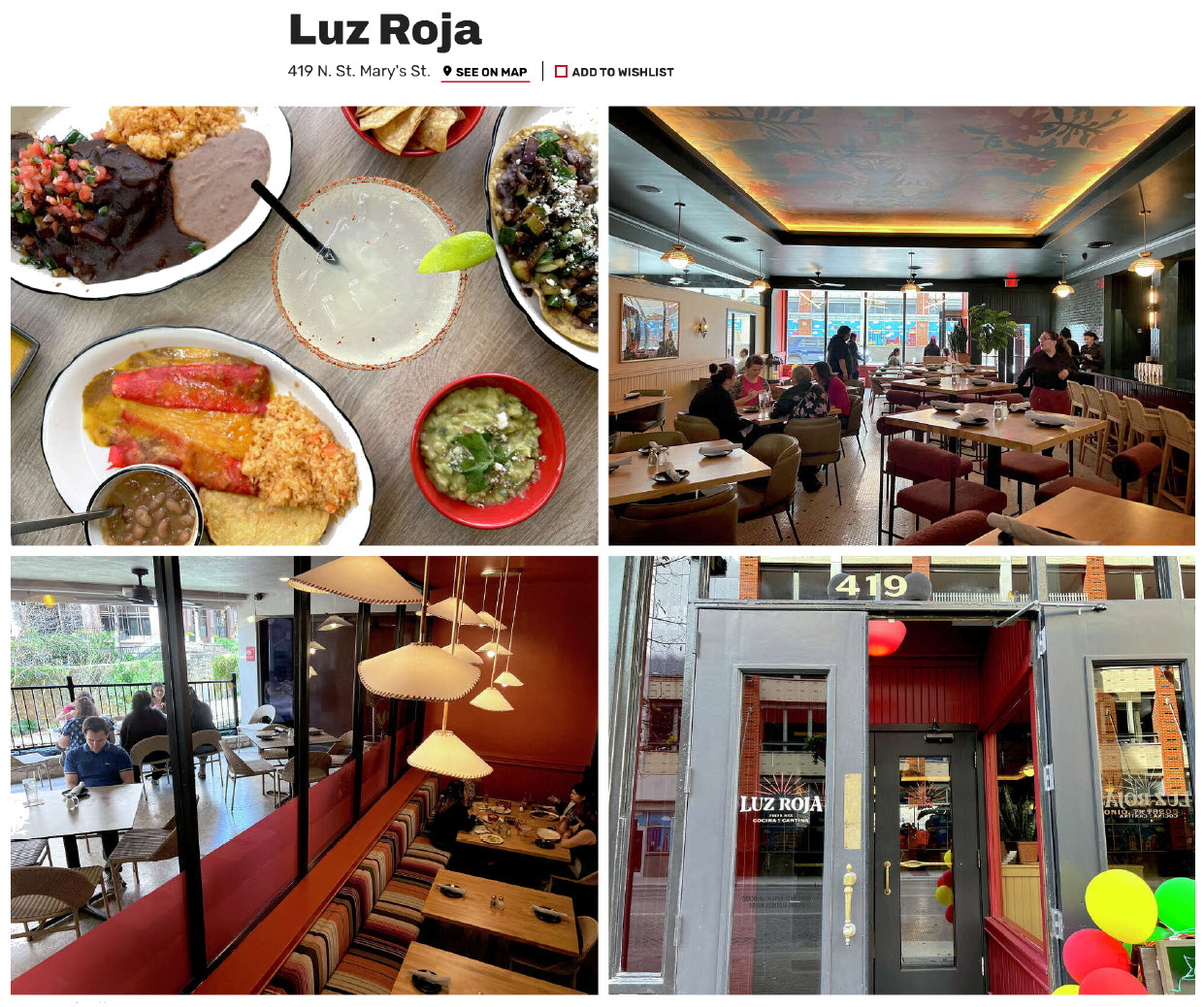
He also opened Luz Roja, an upscale Tex-Mex restaurant on the San Antonio River Walk, in March 2025 — the same month he halted investor payments. The restaurant closed in October 2025 with five days' notice to staff, leaving $69,000 in unpaid contractor bills.
Known Personal Assets
Properties Sold or Foreclosed During Wind-Down
Eventide Ranch — Exotic Animals
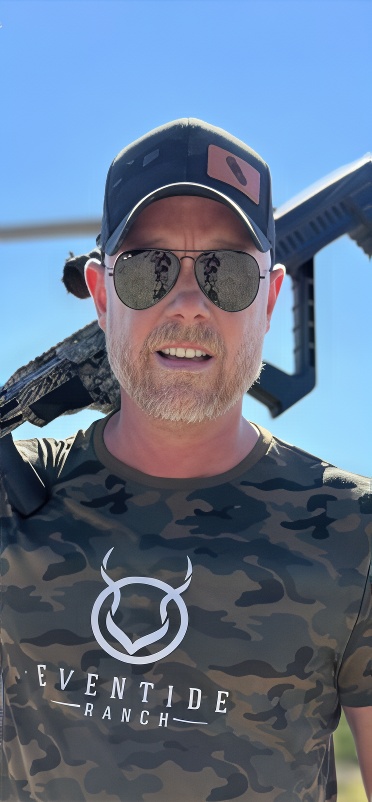
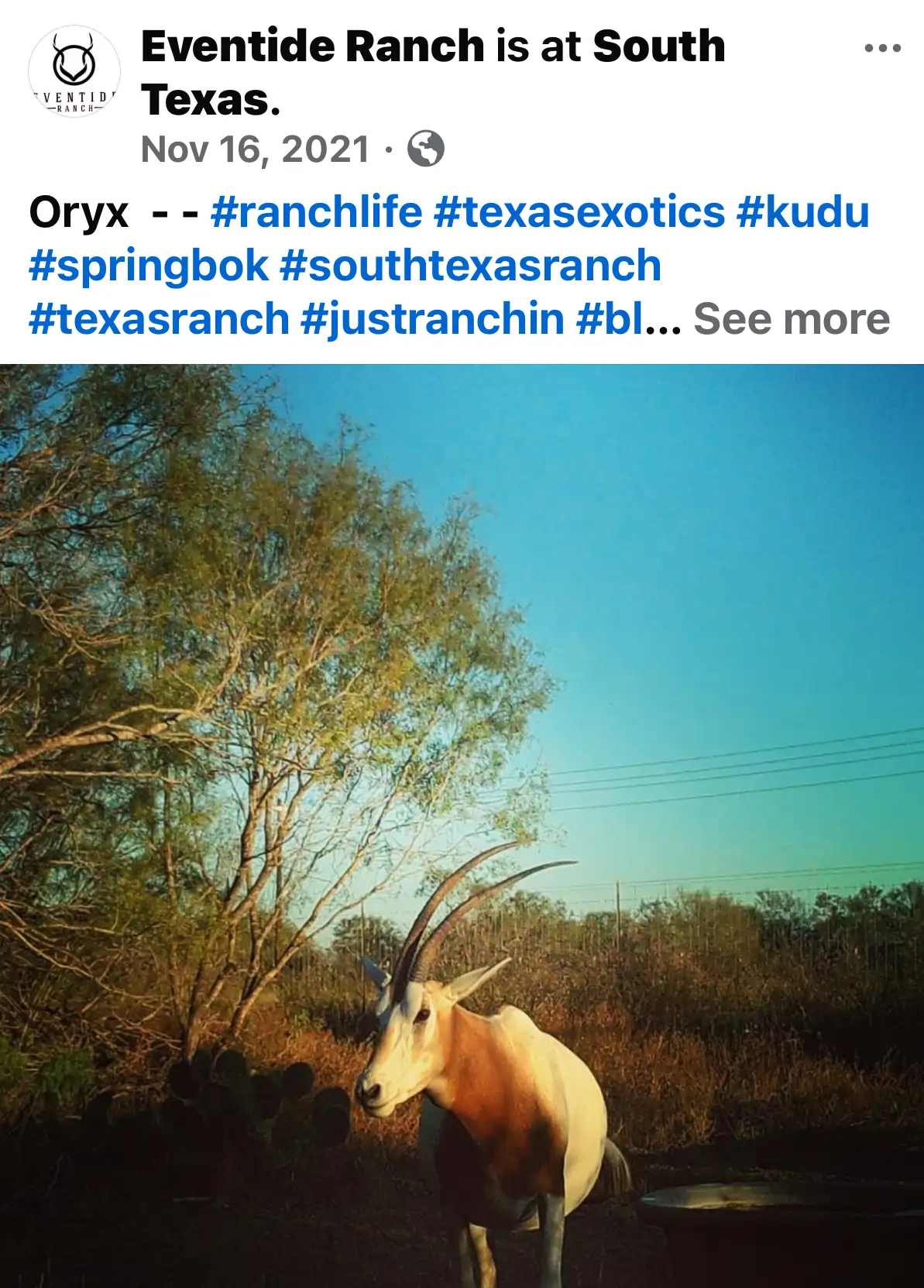
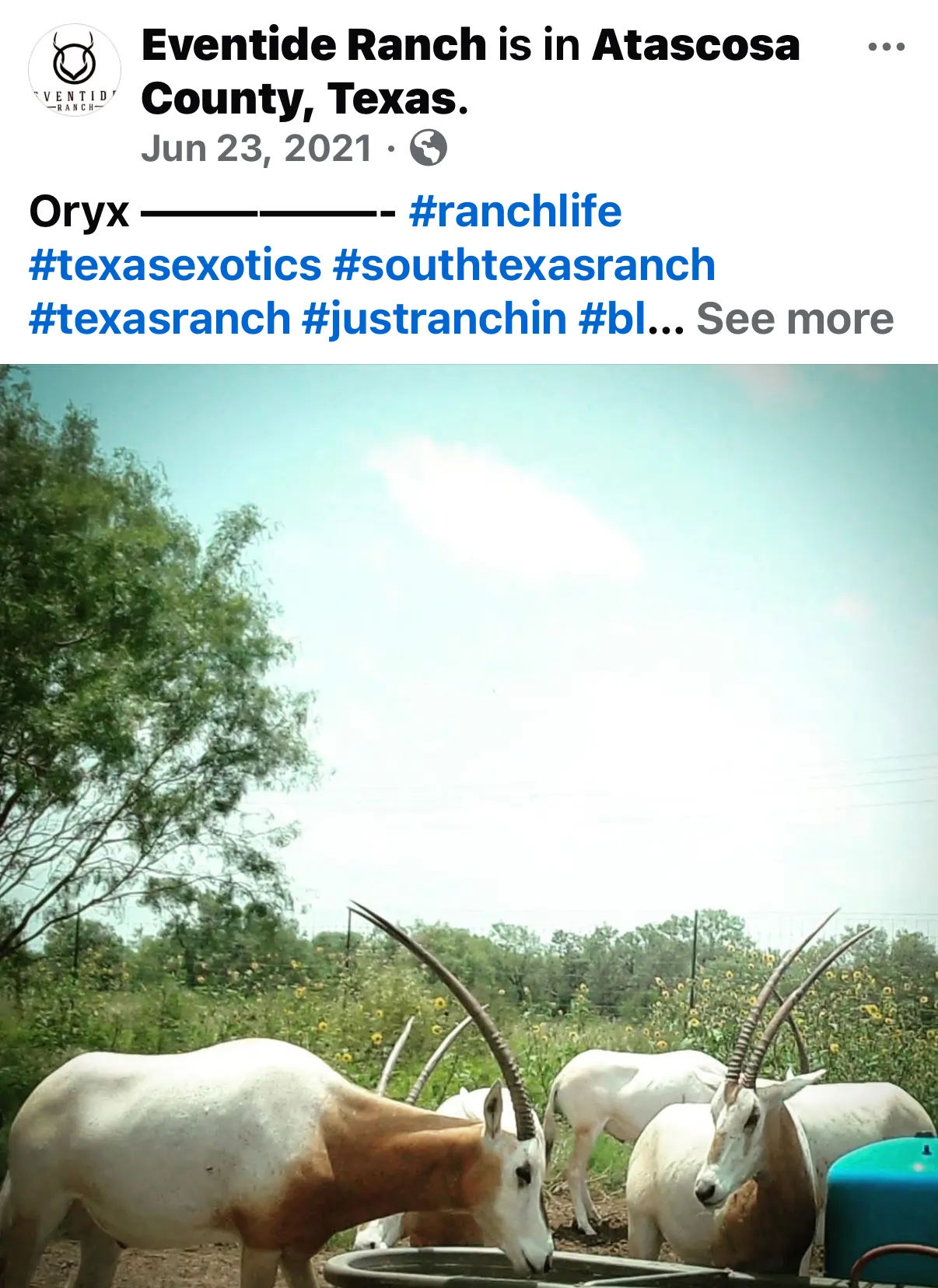
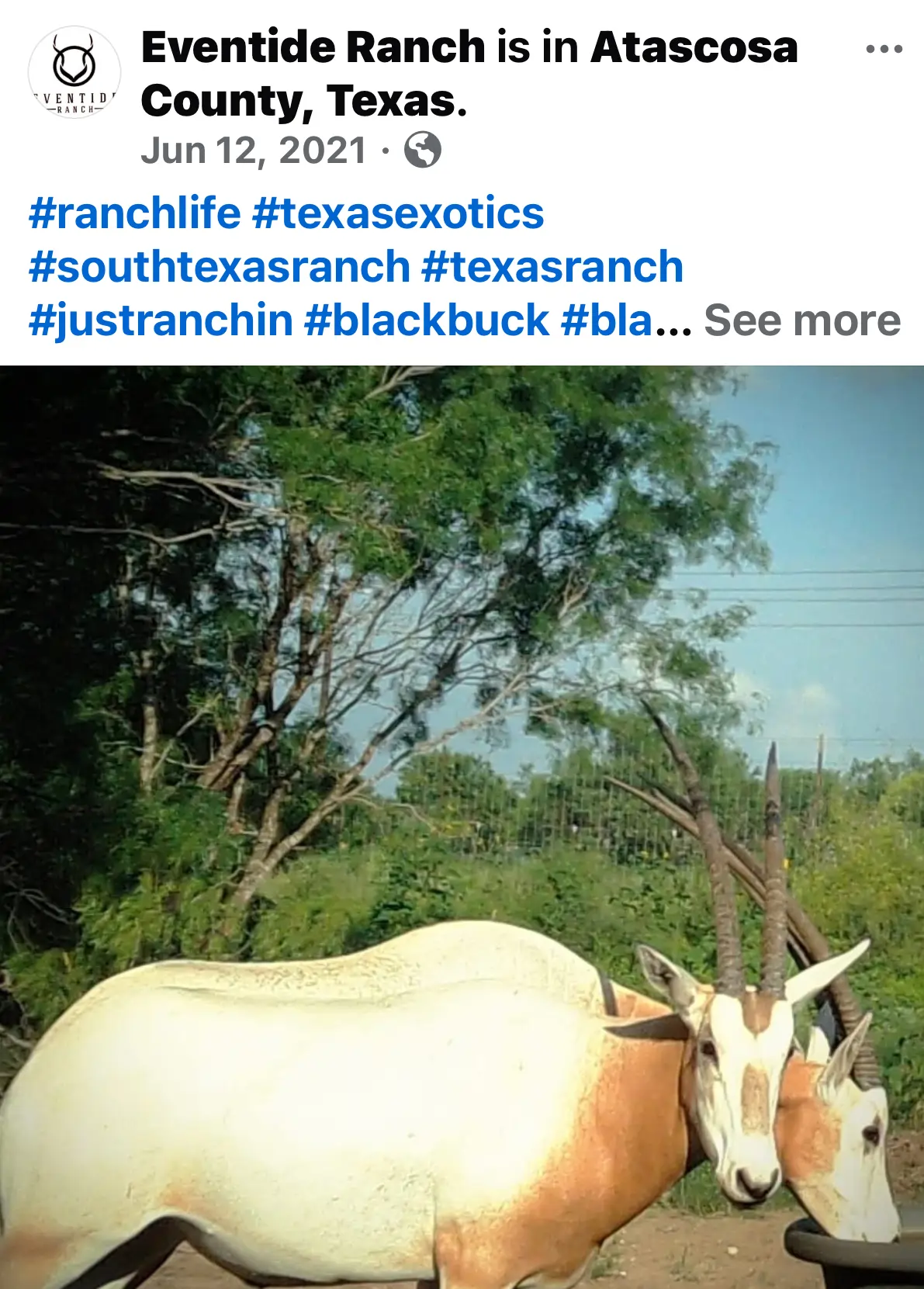
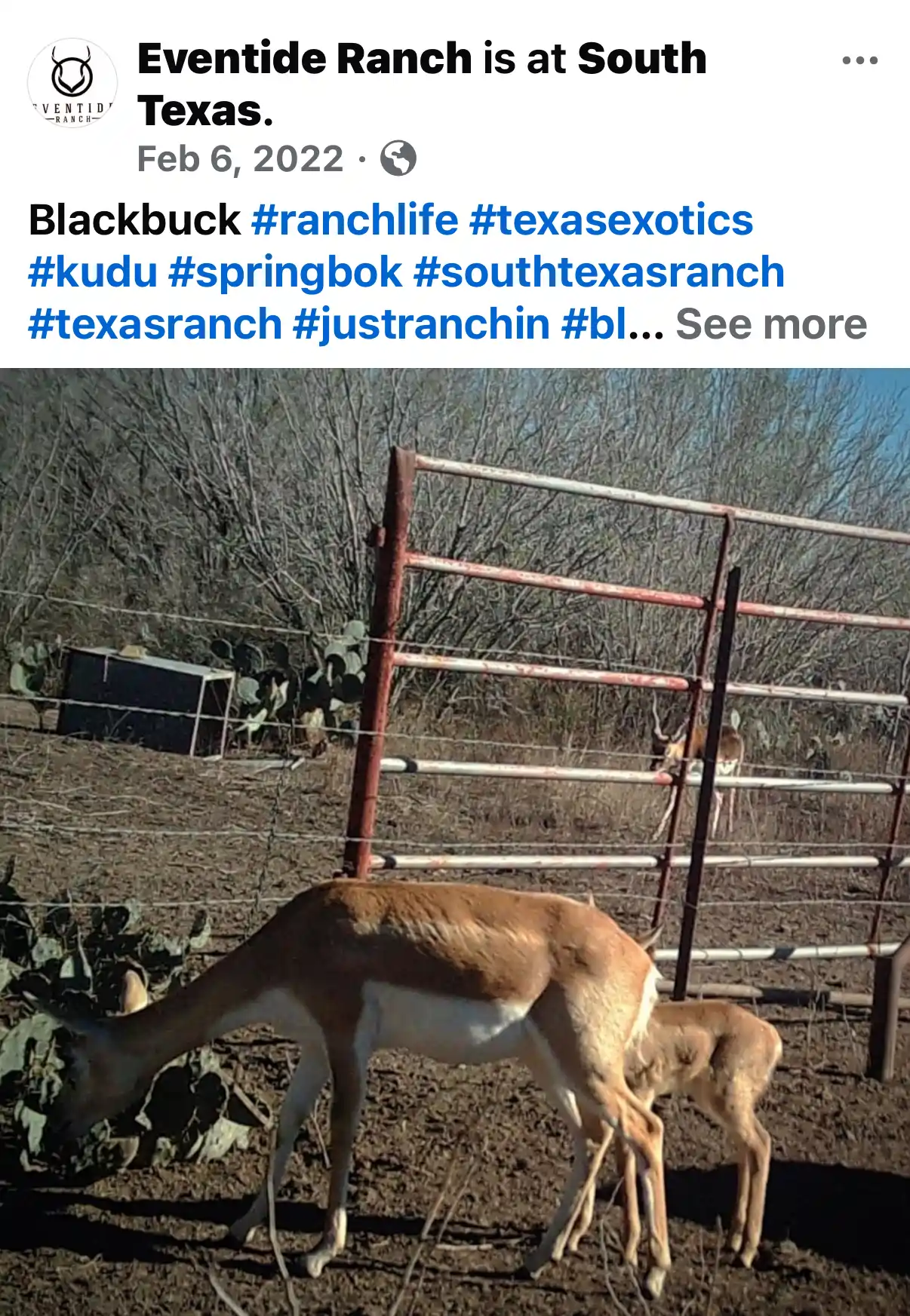
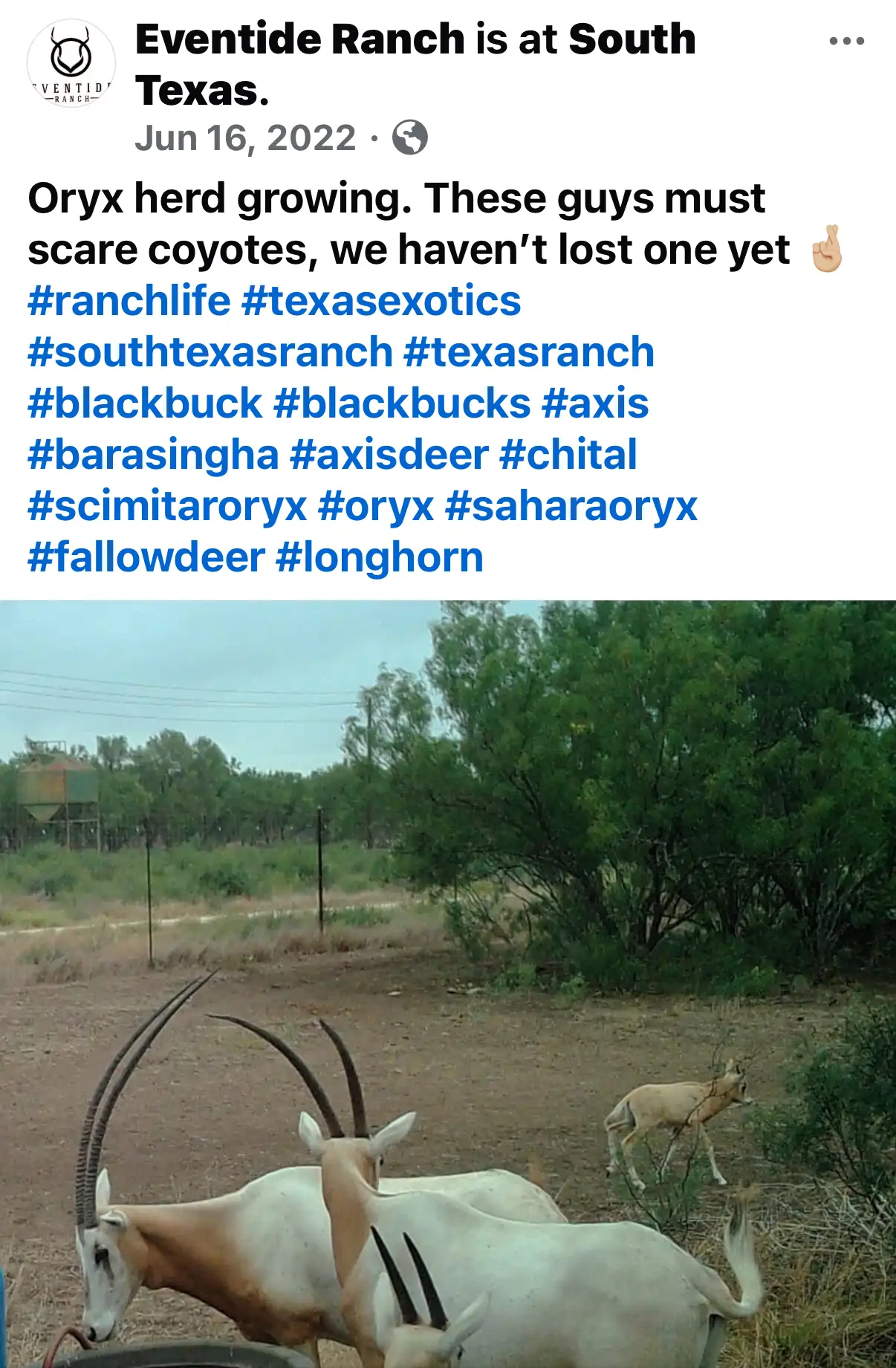
According to the federal plea agreement, Elder used investor funds to acquire personal real estate holdings, including Eventide Ranch — a private exotic animal ranch located in Atascosa County, South Texas. The ranch was stocked with expensive exotic wildlife including Scimitar Oryx, Zebras, Blackbuck antelope, Axis deer, Barasingha, Fallow deer, and Longhorn cattle — all funded by investor capital.
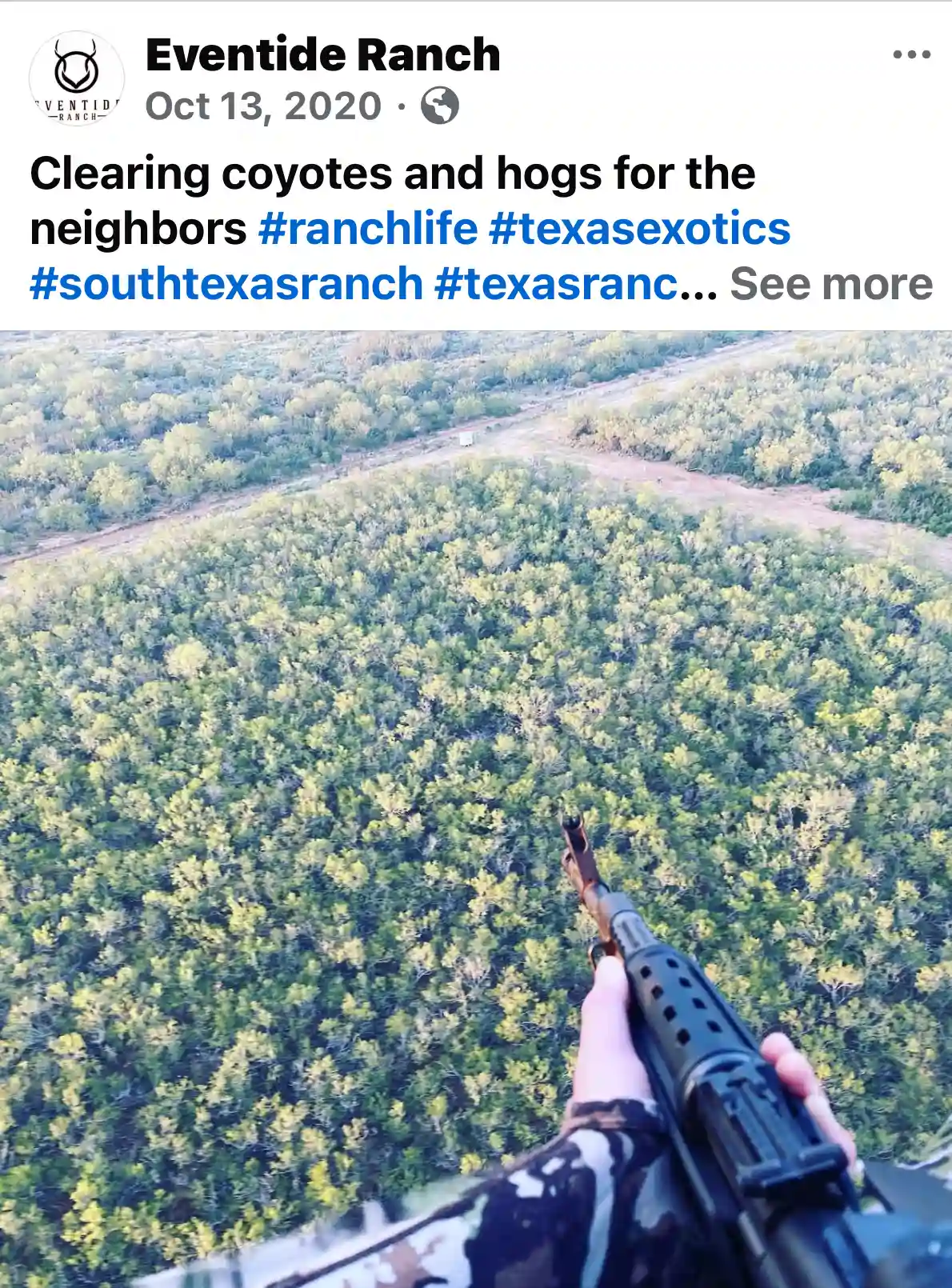
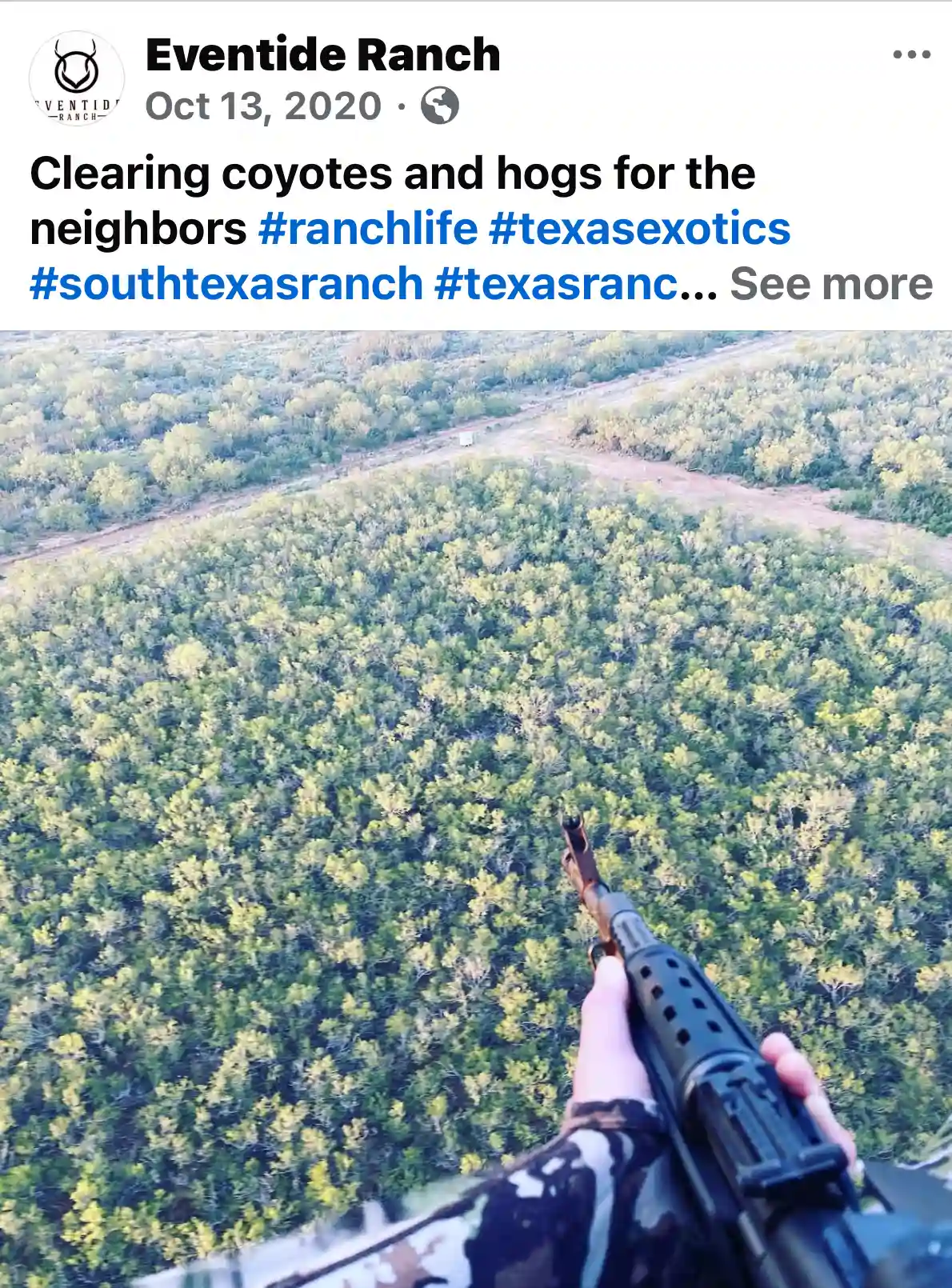
Elder publicly celebrated the ranch on the Eventide Ranch Facebook page, posting photos of the exotic animals between 2020 and 2022 — the same period he was actively soliciting new investors. He also used his camo-painted Robinson R44 helicopter to conduct aerial hog and coyote hunts over the ranch property.
Elder sold Eventide Ranch on December 12, 2023 — in the midst of the ongoing fraud, while investors continued to receive false assurances about their returns. The sale occurred approximately 14 months before the scheme collapsed and the FBI investigation became public in early 2025. Despite the sale, multiple Atascosa County land tracts associated with the ranch remain listed among the 13 real properties subject to forfeiture in the federal plea agreement.

Private Jet — SOCATA TBM 700 (N776RM)
Among the personal assets Elder acquired with investor funds was a SOCATA TBM 700 turboprop aircraft, tail number N776RM. The TBM 700 is a high-performance single-engine turboprop capable of speeds exceeding 300 knots, with a range of over 1,500 nautical miles — a favored aircraft among wealthy executives. New examples sell for approximately $3–4 million; used examples in this class typically trade between $1–2 million.
Elder was photographed aboard the aircraft on January 19, 2024, posting to social media: "Vegas for the weekend!" — while hundreds of investors were waiting for overdue returns on their DJE investments.
Private Helicopter — Robinson R44 Raven I (N244WB)
Elder also purchased a 2006 Robinson R44 Raven I helicopter, tail number N244WB, using investor funds. The R44 is a four-seat light helicopter with a market value of approximately $200,000–$300,000. In 2024 — at the peak of the fraud — Elder had the helicopter wrapped in a custom vinyl camouflage wrap with a shark-mouth design, a conspicuous and expensive vanity modification.
The holding company Elder used to own the helicopter was named GET TO THE CHOPPA LLC — a deliberate play on the famous Arnold Schwarzenegger line from the 1987 film Predator. Texas Franchise Tax records (Report Year 2024, filed 08-20-2024) list Devin Elder as both President and Director, with the registered address of 115 Camaron St, San Antonio, TX 78205 — the same address used by DJE MGR LLC, the registered agent for Elder’s entire network of shell companies. Taxpayer No.: 32077553116.
Elder used the helicopter to conduct aerial hog and coyote hunts over Eventide Ranch, posting to the Eventide Ranch Facebook page on October 13, 2020: “Clearing coyotes and hogs for the neighbors”— while simultaneously soliciting new investor capital for DJE real estate projects.
Luz Roja Restaurant — Rise & Fall
"Luz Roja marks not only a new spot along the river, but one with strong San Antonio connections, including owner Devin Elder and respected consultant and brand-builder Dan Ward."— San Antonio Express-News review, 2025
In March 2025, Elder opened Luz Roja, an elevated Tex-Mex restaurant at 405 N. St. Mary's St. (later noted as 419 N. St. Mary's St.) in the Travis Building on the San Antonio River Walk. The restaurant occupied the former home of the Original Blanco Cafe, which had operated for 45 years.
Elder hired respected restaurant consultant Dan Ward of Holistic Hospitality and local design firm Haus of Powell to create the experience. The menu featured elevated Tex-Mex by chef Rodrigo Elisea, including chicken mole, cochinita pibil, and a full cocktail bar. The restaurant was billed as a neighborhood destination, not a tourist trap.
Luz Roja opened the same month Elder halted investor distributions. By Spring 2025, Boston-based UC Funds had foreclosed on the Travis Building after DJE defaulted on an $18.25 million loan; UC Funds won the auction for $16.7 million.
On October 10, 2025, Elder closed Luz Roja with just five days' notice to staff. Luz Roja LLC owed more than $69,000 in unpaid bills to contractor Hermes Group. A former employee told the Business Journal: "I have not seen or heard from Devin since April. They were putting $0 into the restaurant."
Port Aransas Beach House
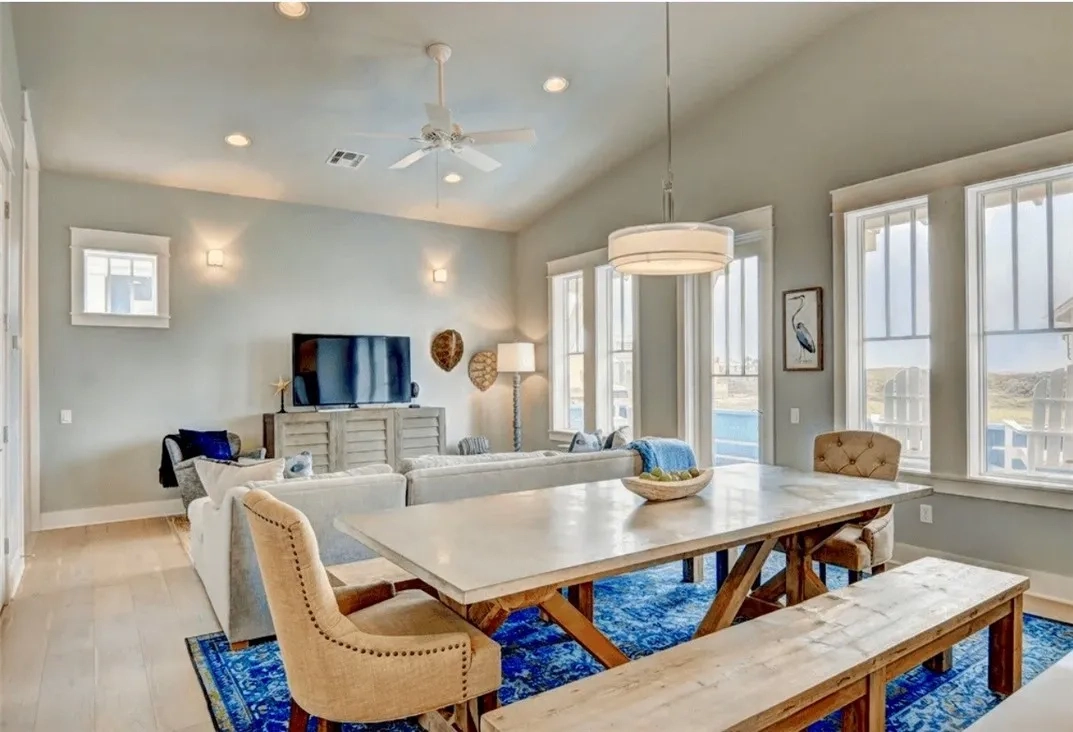
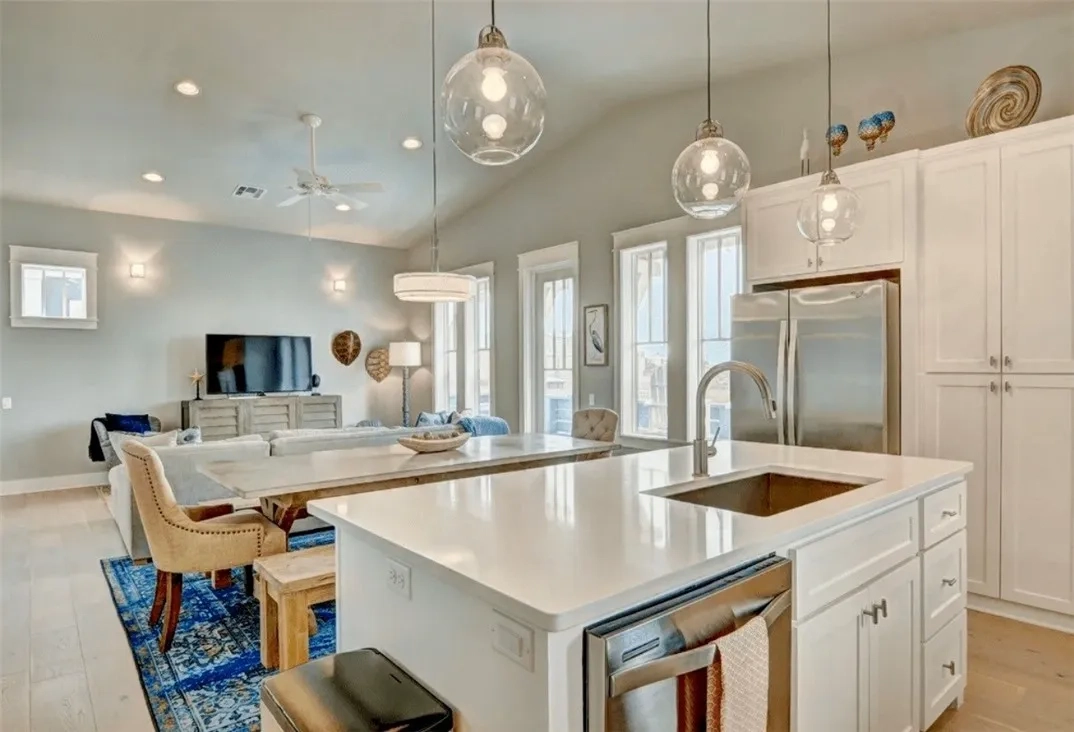
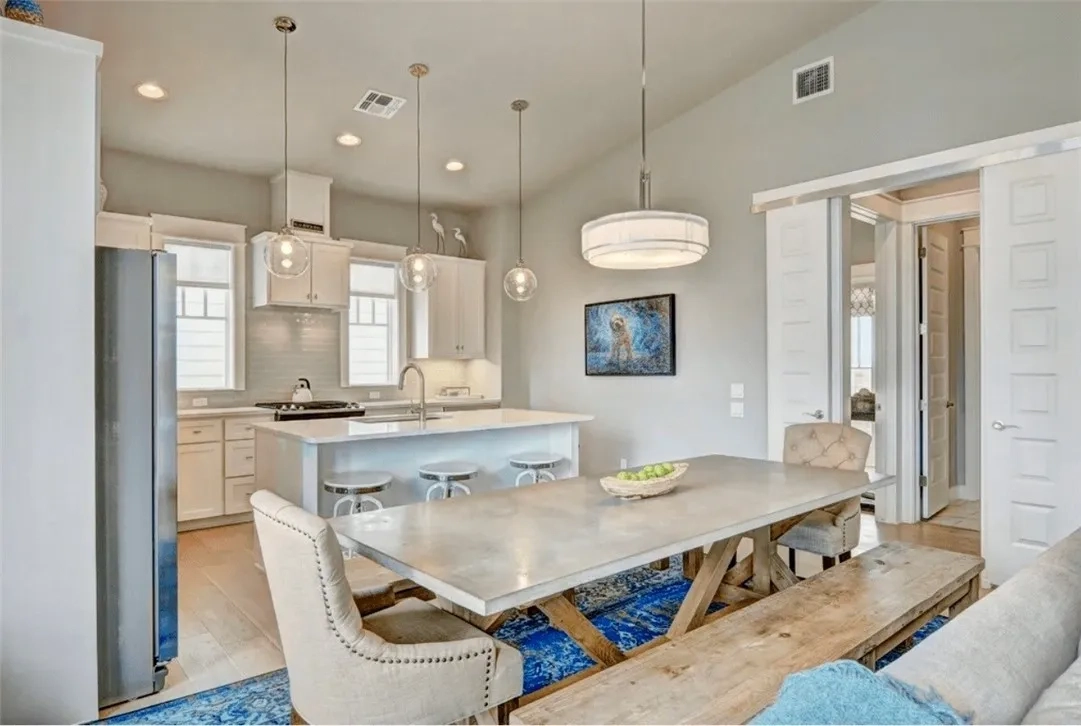
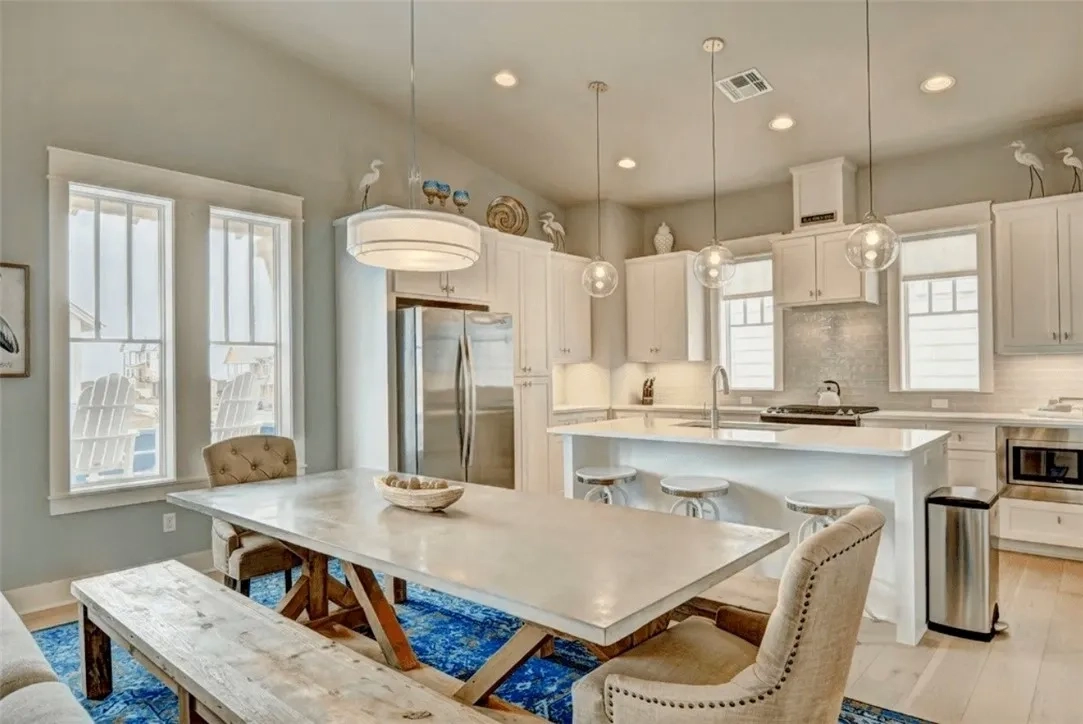
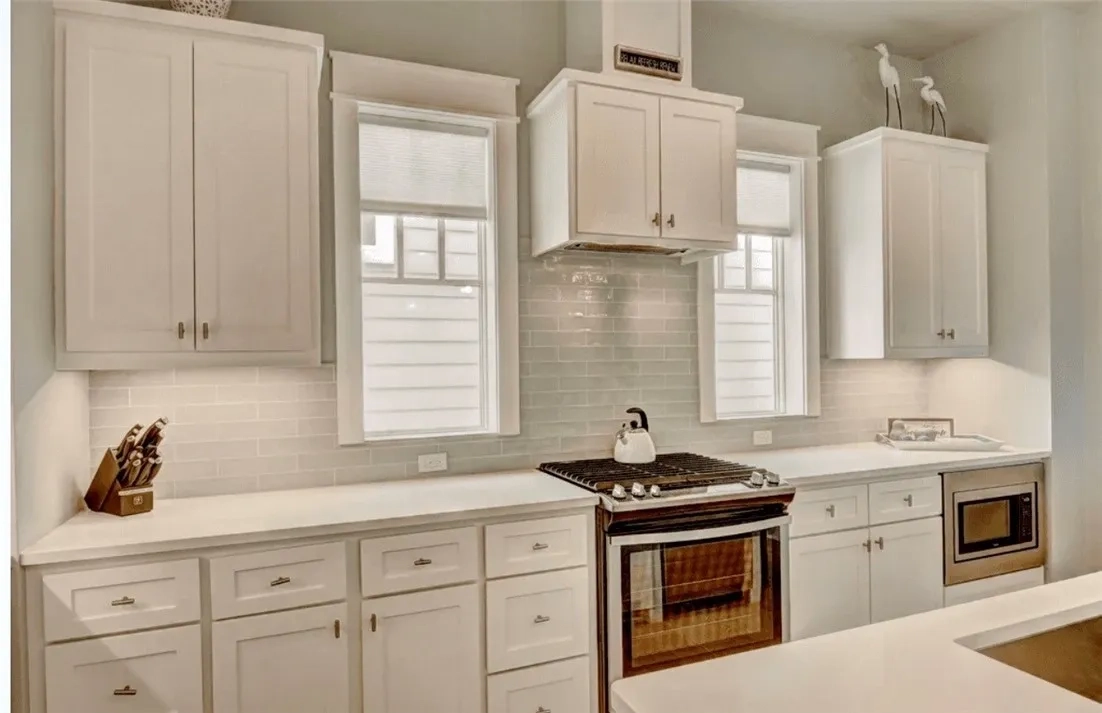
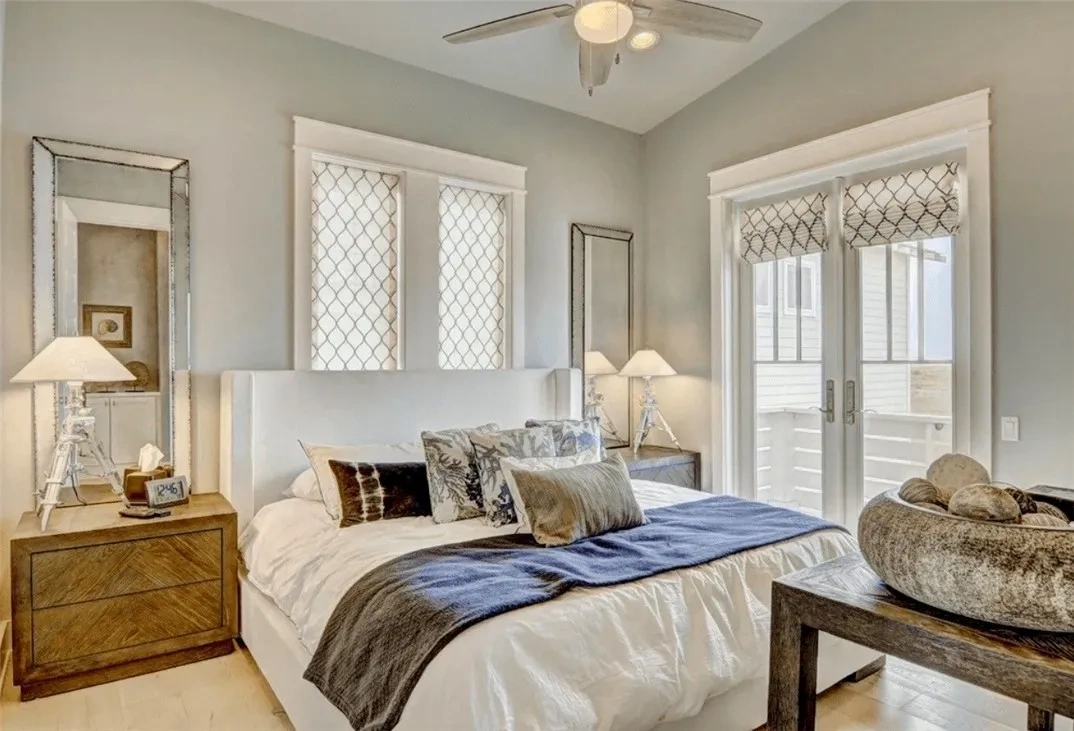
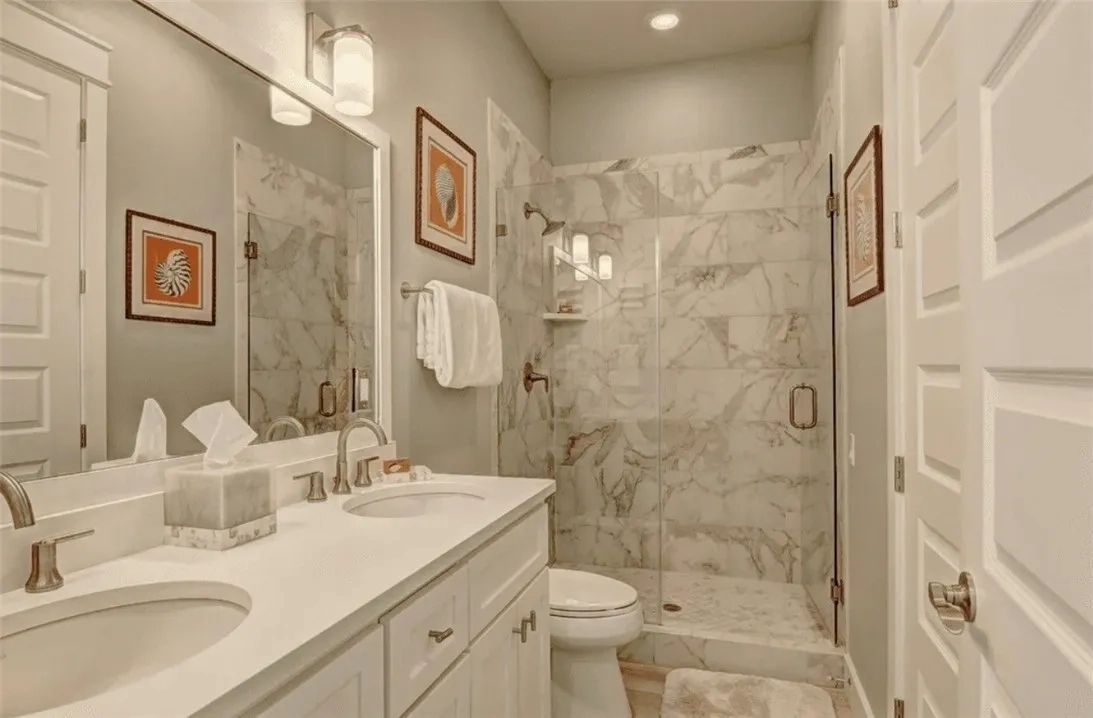

Elder purchased a single-family home at 717 Sunrise Ave (Lot 14, Block 1, Sunflower Beach P.U.D.), Port Aransas, Nueces County, Texas — a 3-bedroom, 4-bathroom, 2,395 sq. ft. Gulf-front residence in the exclusive gated community of Admirals Row. The property features cathedral ceilings, original teak flooring, a dedicated primary suite floor with ocean views, and a private turfed patio. The community allows short-term rentals and includes a pool and beach crossover. The property was sold by the federal receiver on June 1, 2026 for $850,000 to SCB SA, LLC (Doc. 51, Case 5:26-cr-00038-FB). It had previously been listed at $1,249,990.
The property was acquired on August 31, 2020 via General Warranty Deed (Instrument No. 2020-2020038780, recorded September 1, 2020 in Nueces County). The grantor was Sunflower Beach Homes LLC (Austin, TX) and the grantee was Sunrise Capital Partners LLC — an Elder-controlled shell company with its registered address at 20770 US Hwy 281 N, Ste 10843, San Antonio, TX 78258.
Personal San Antonio Residence — Sold March 7, 2025
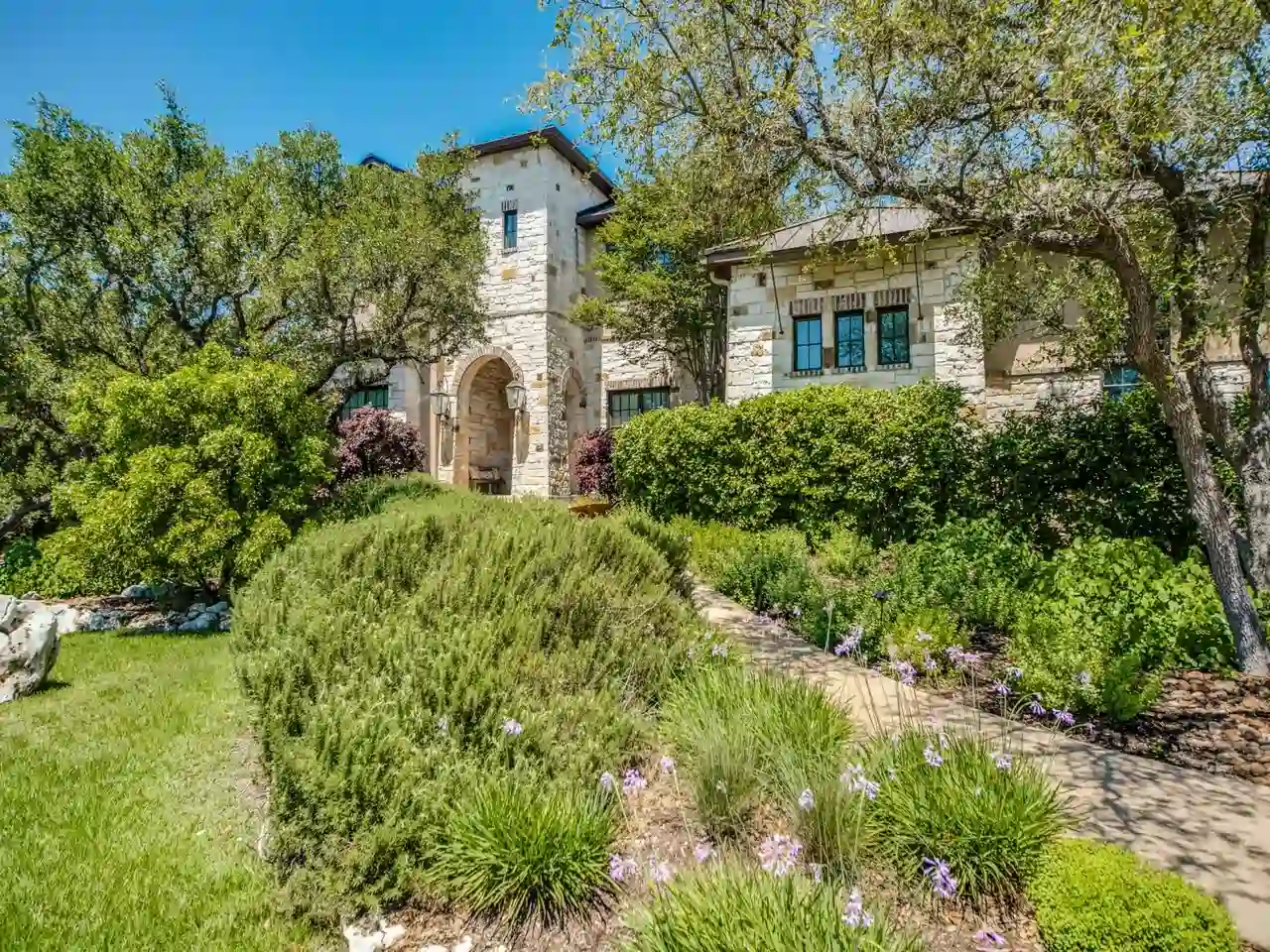
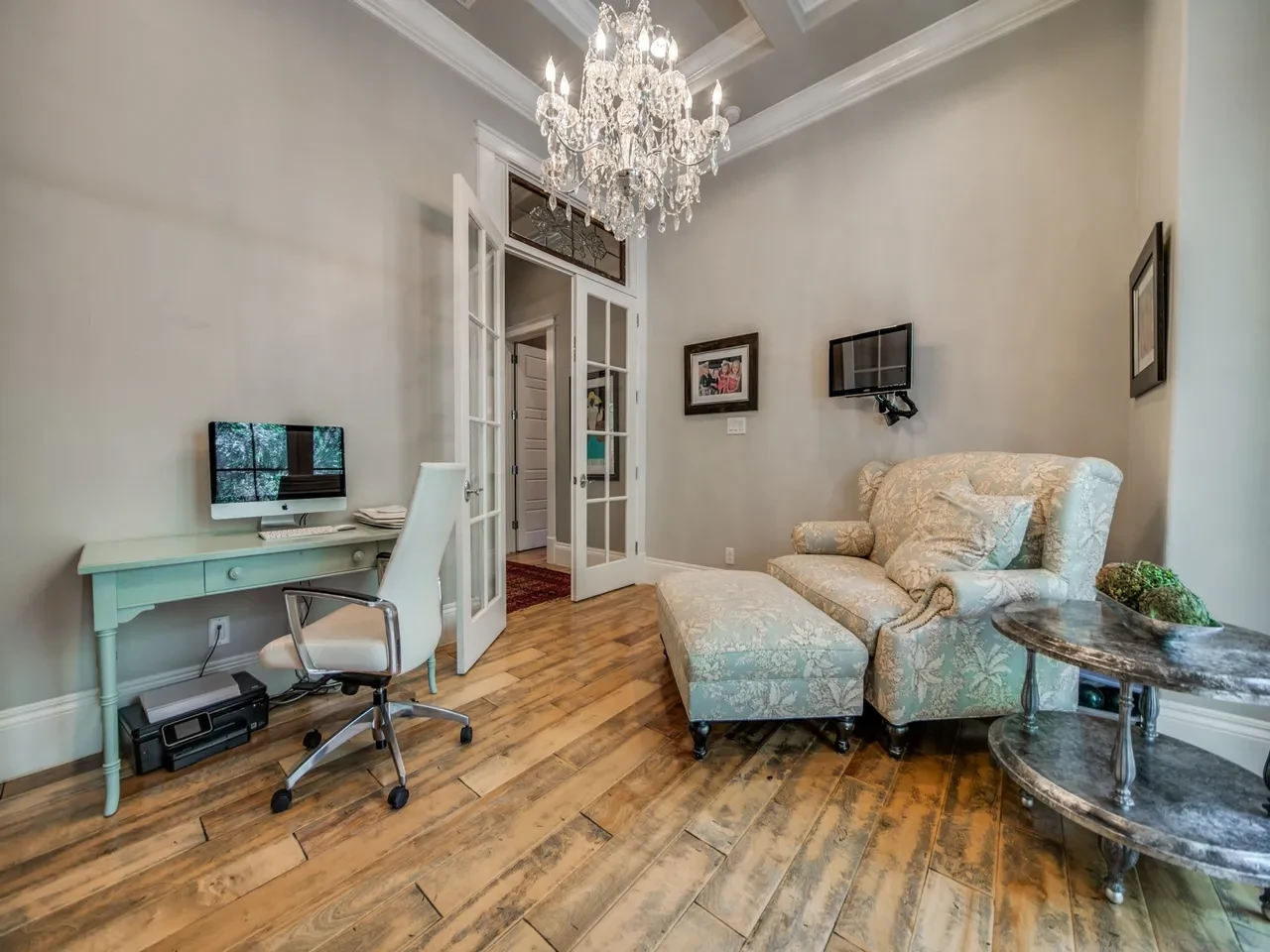
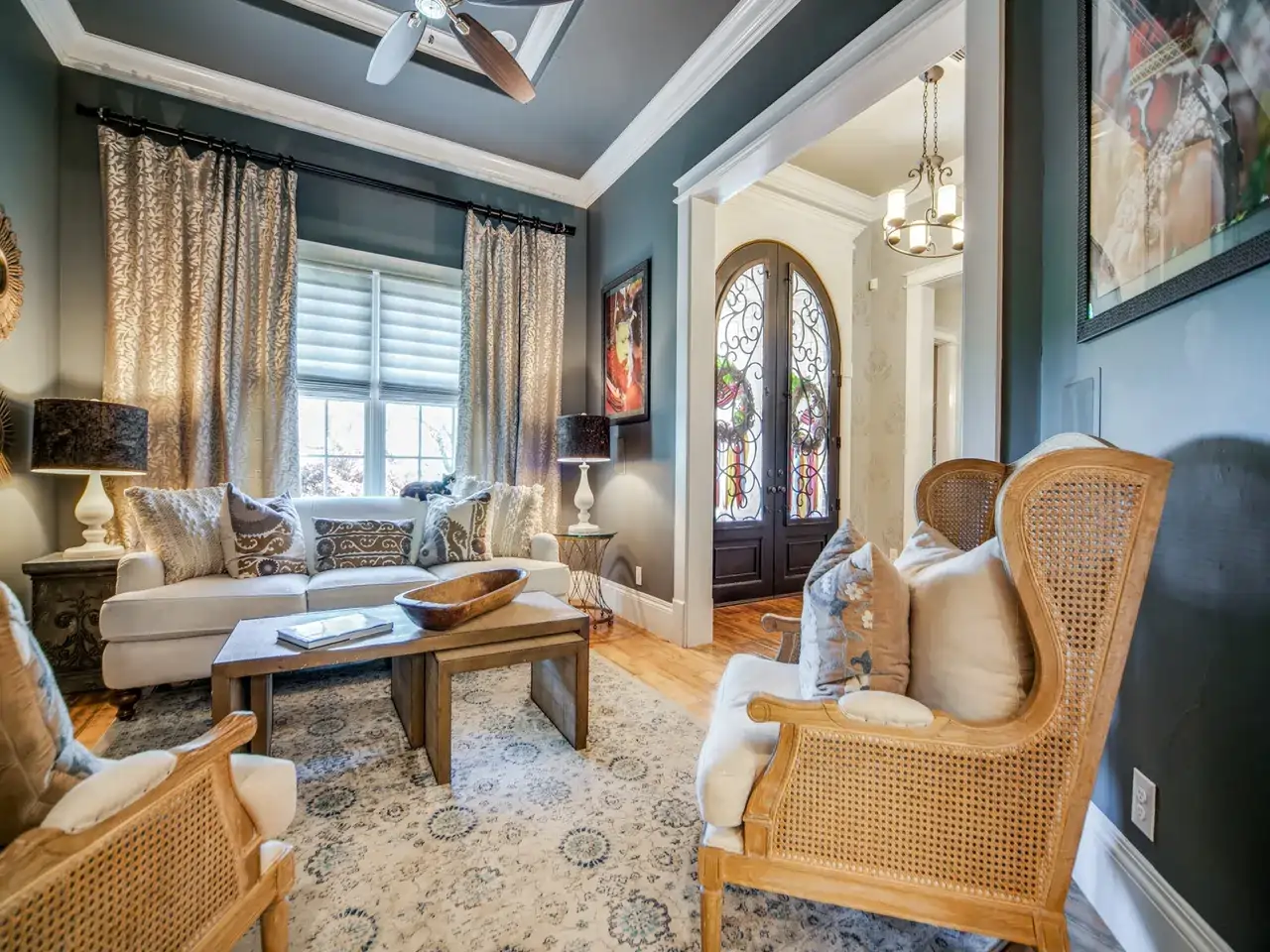
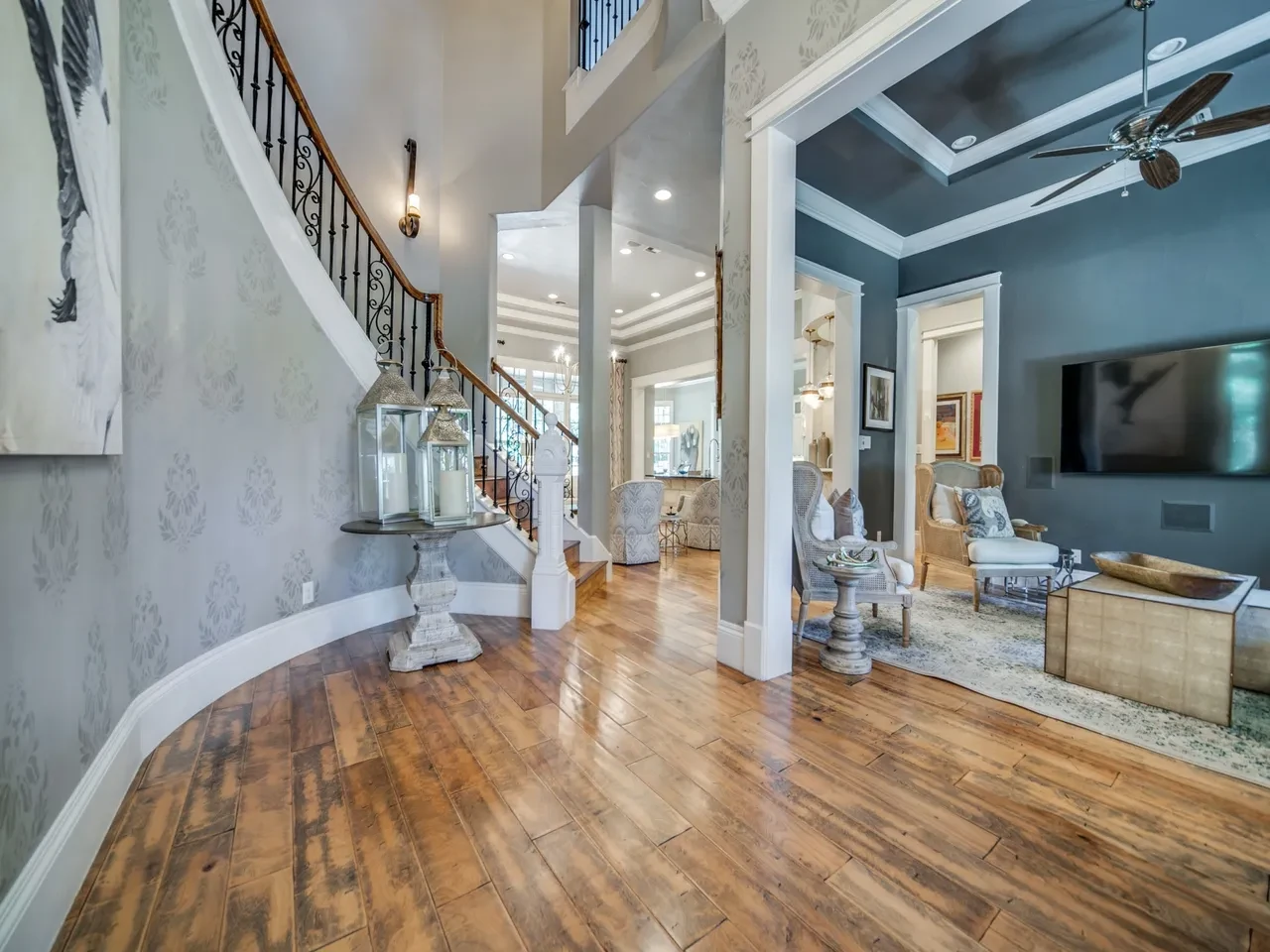
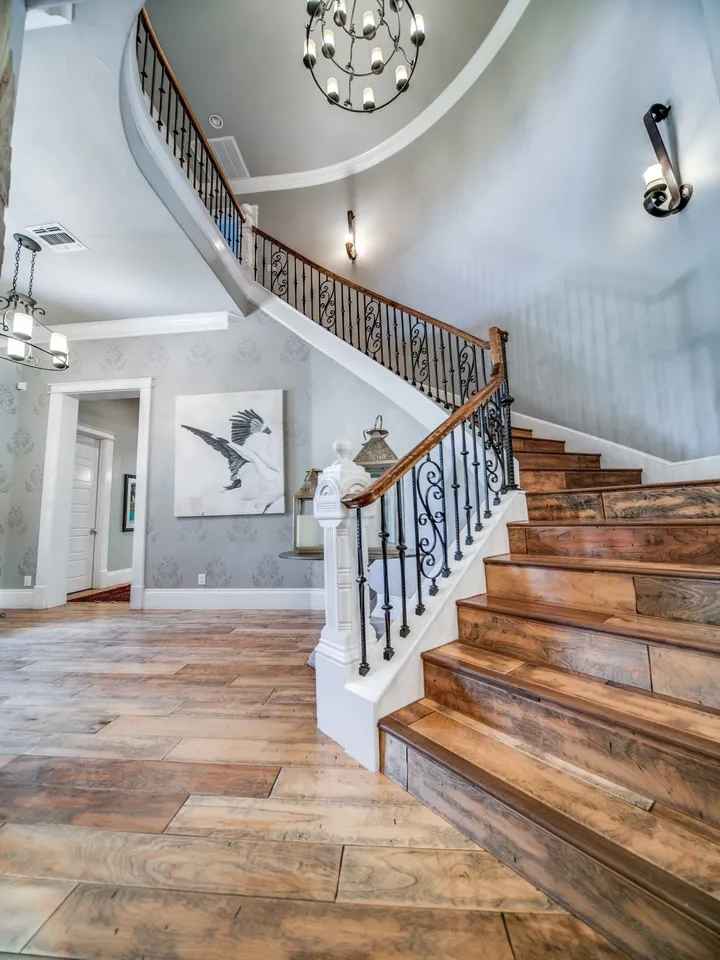
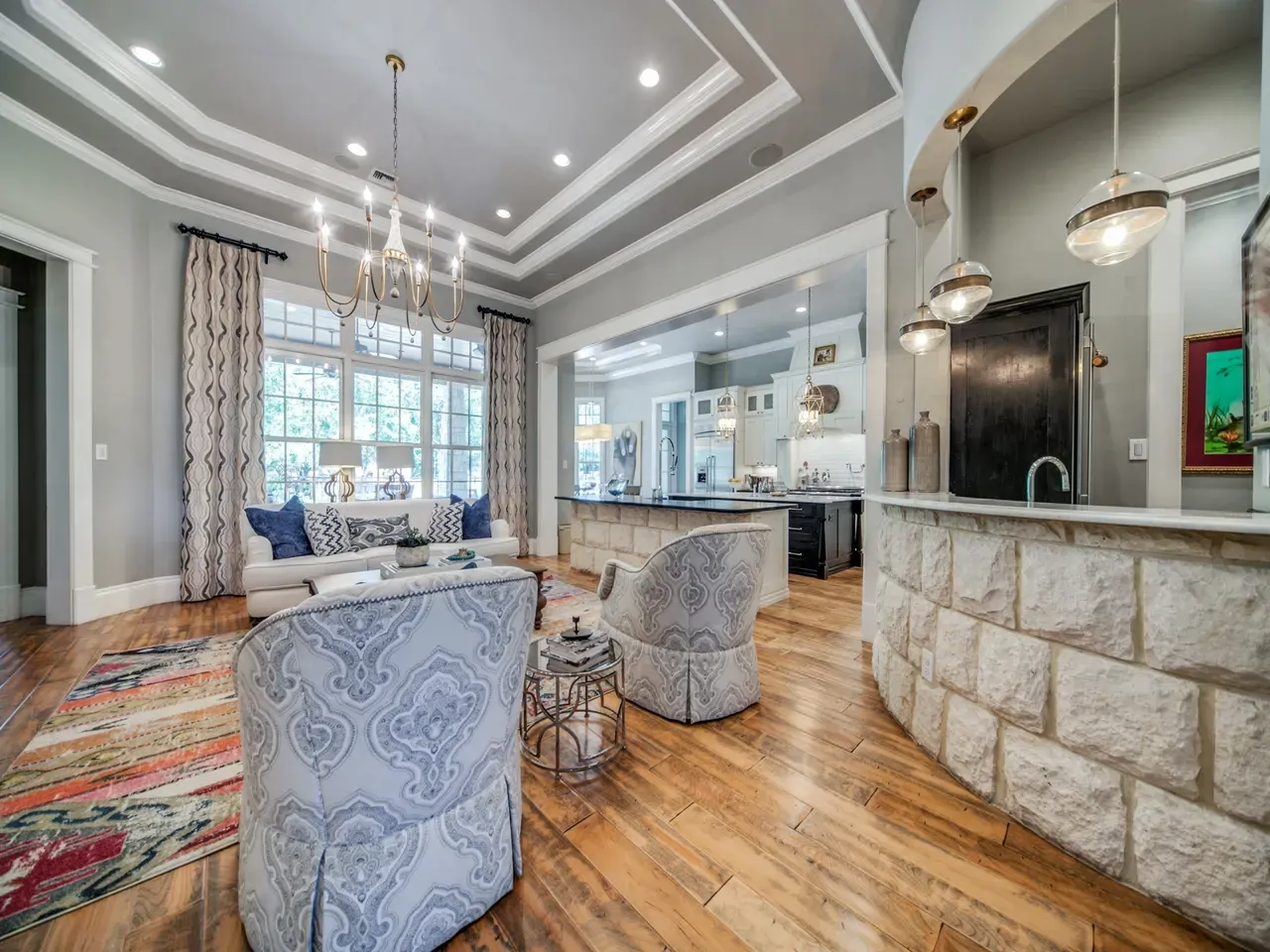
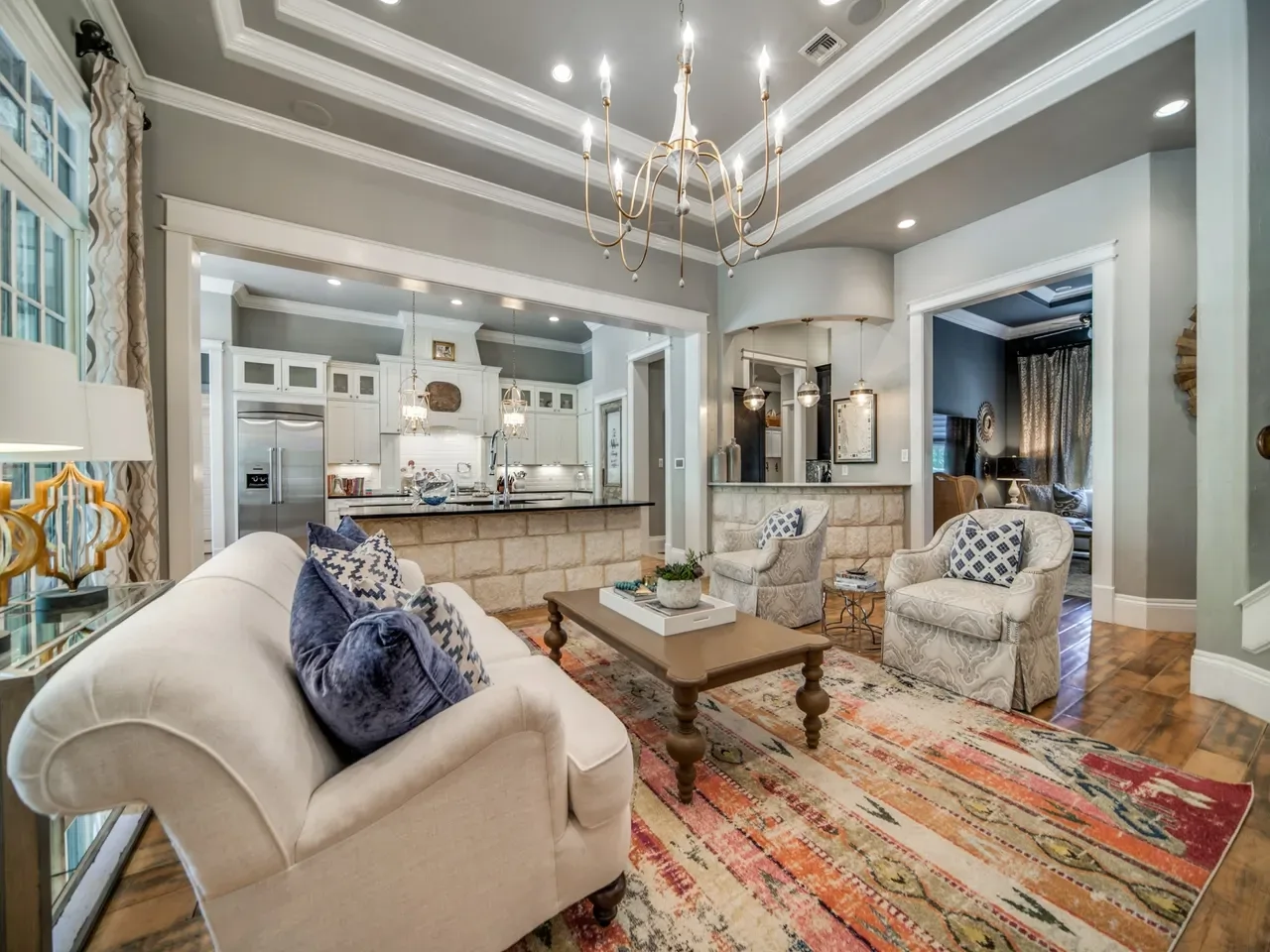
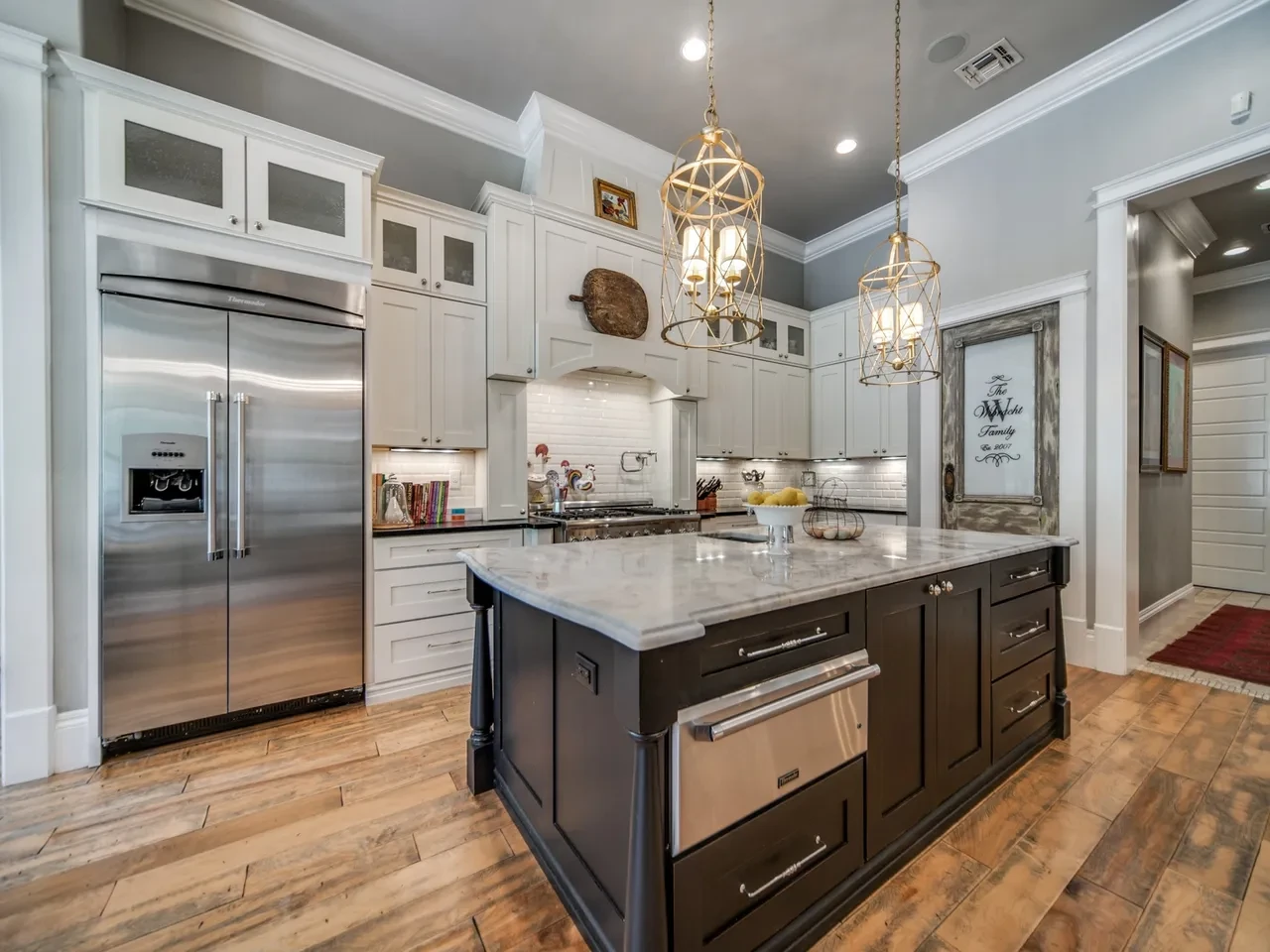
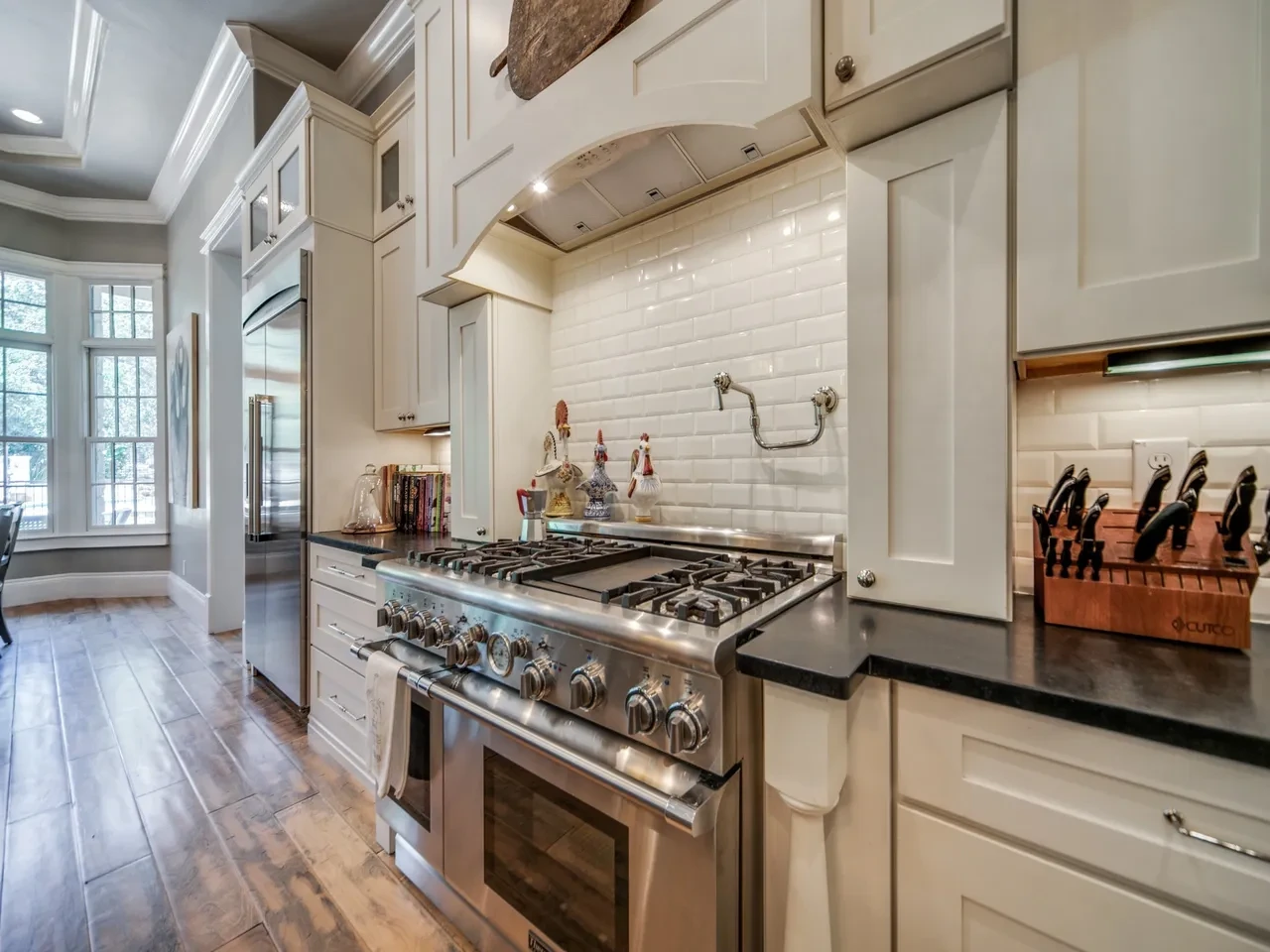
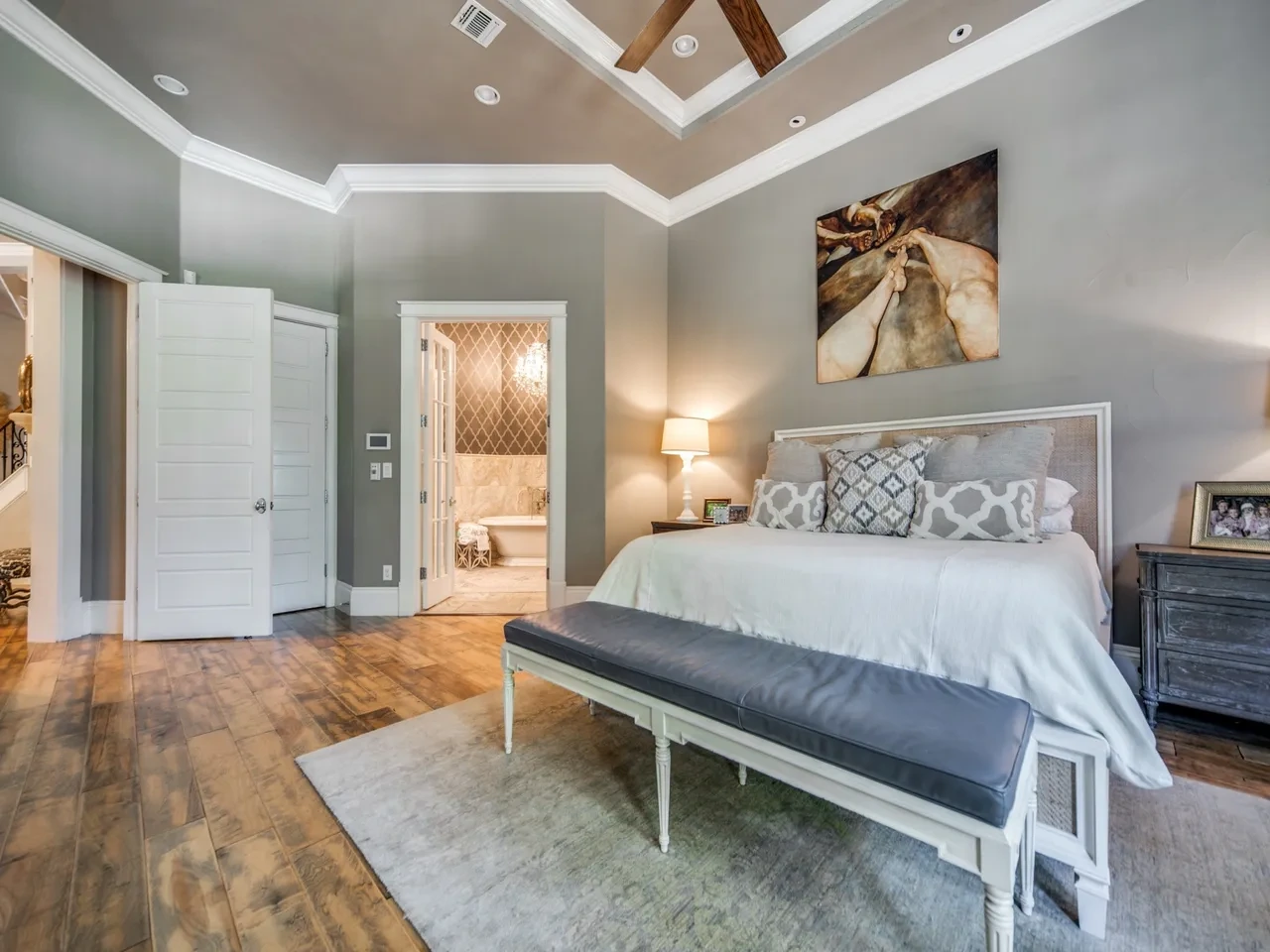
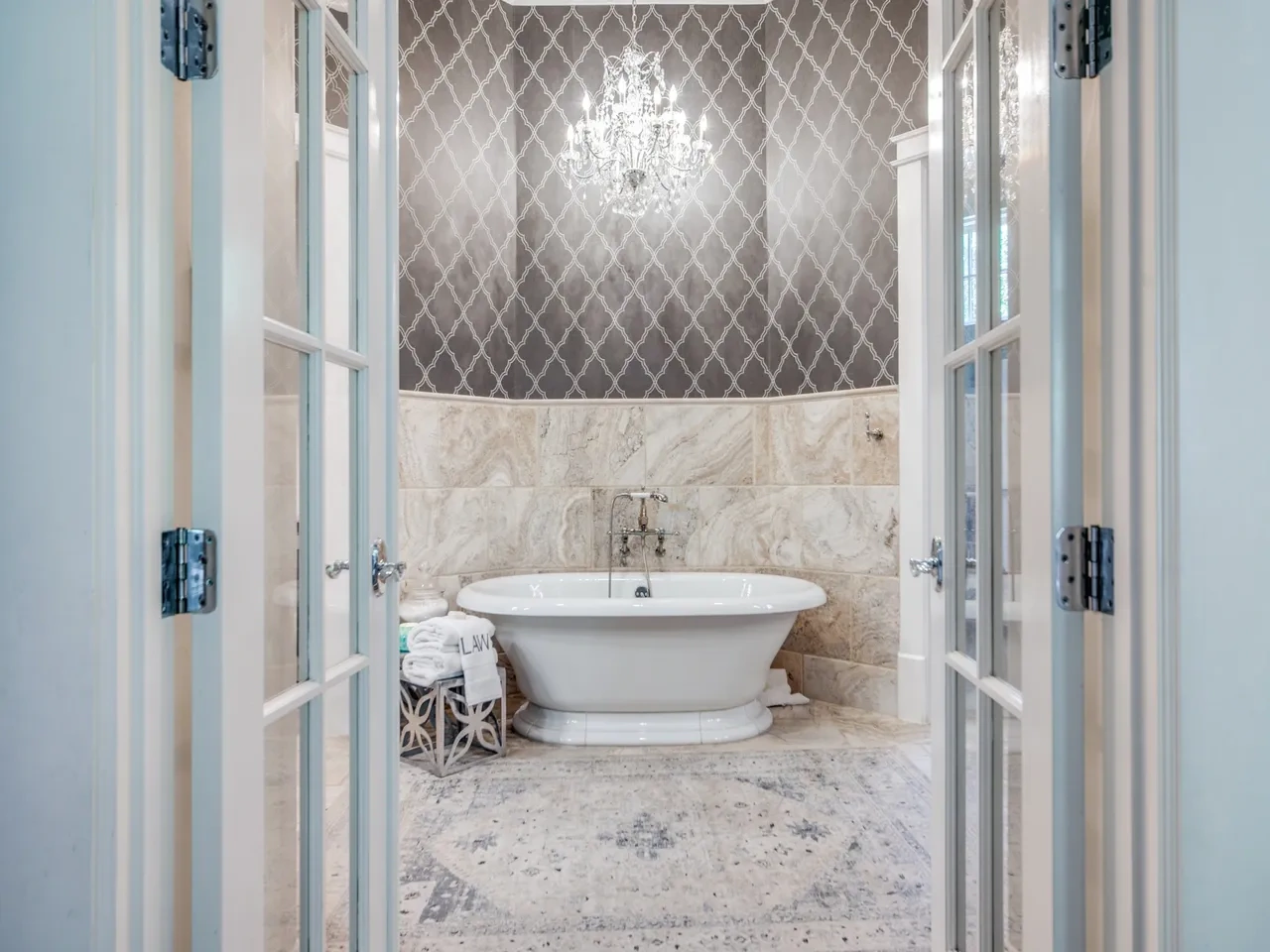
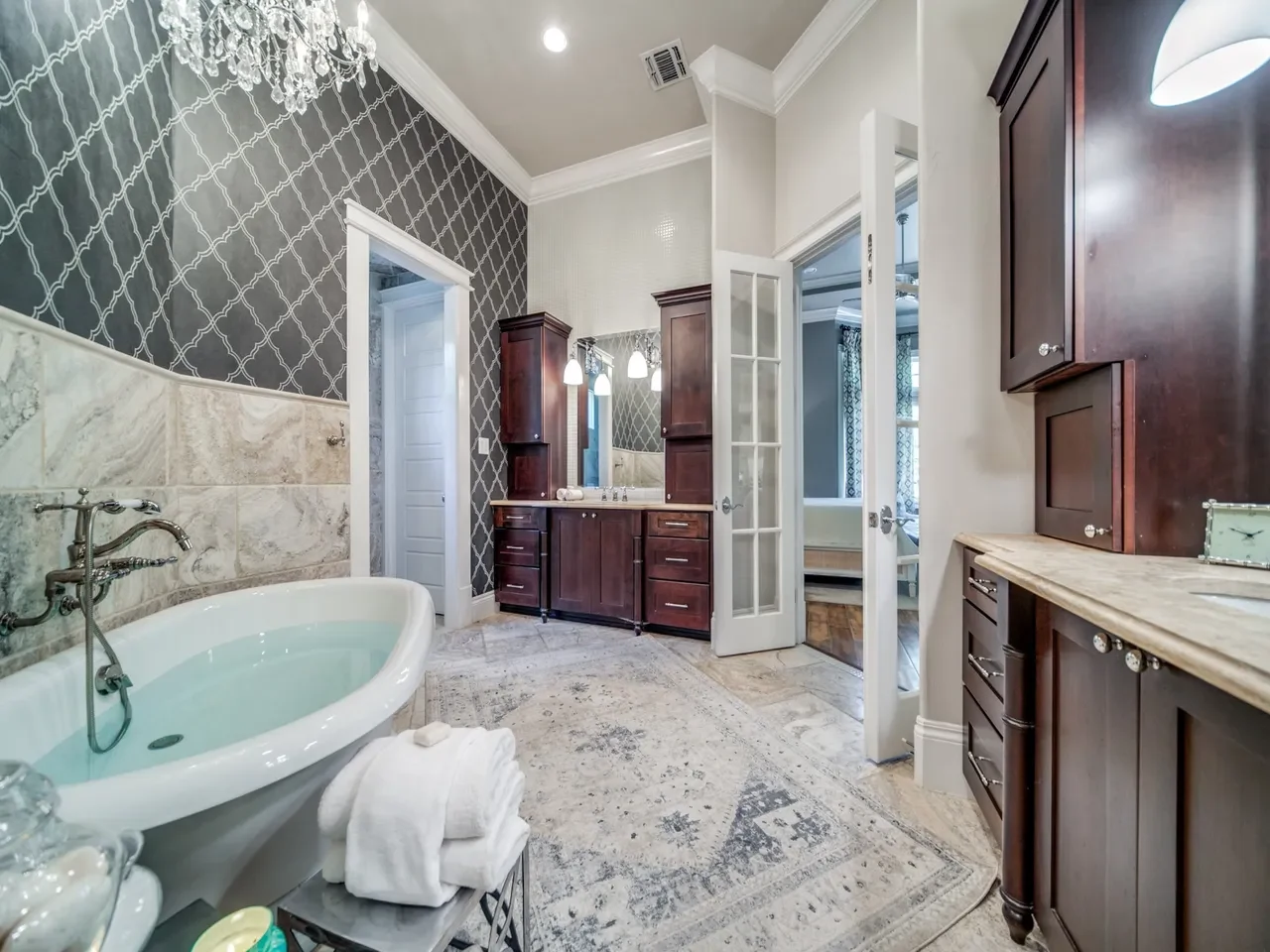
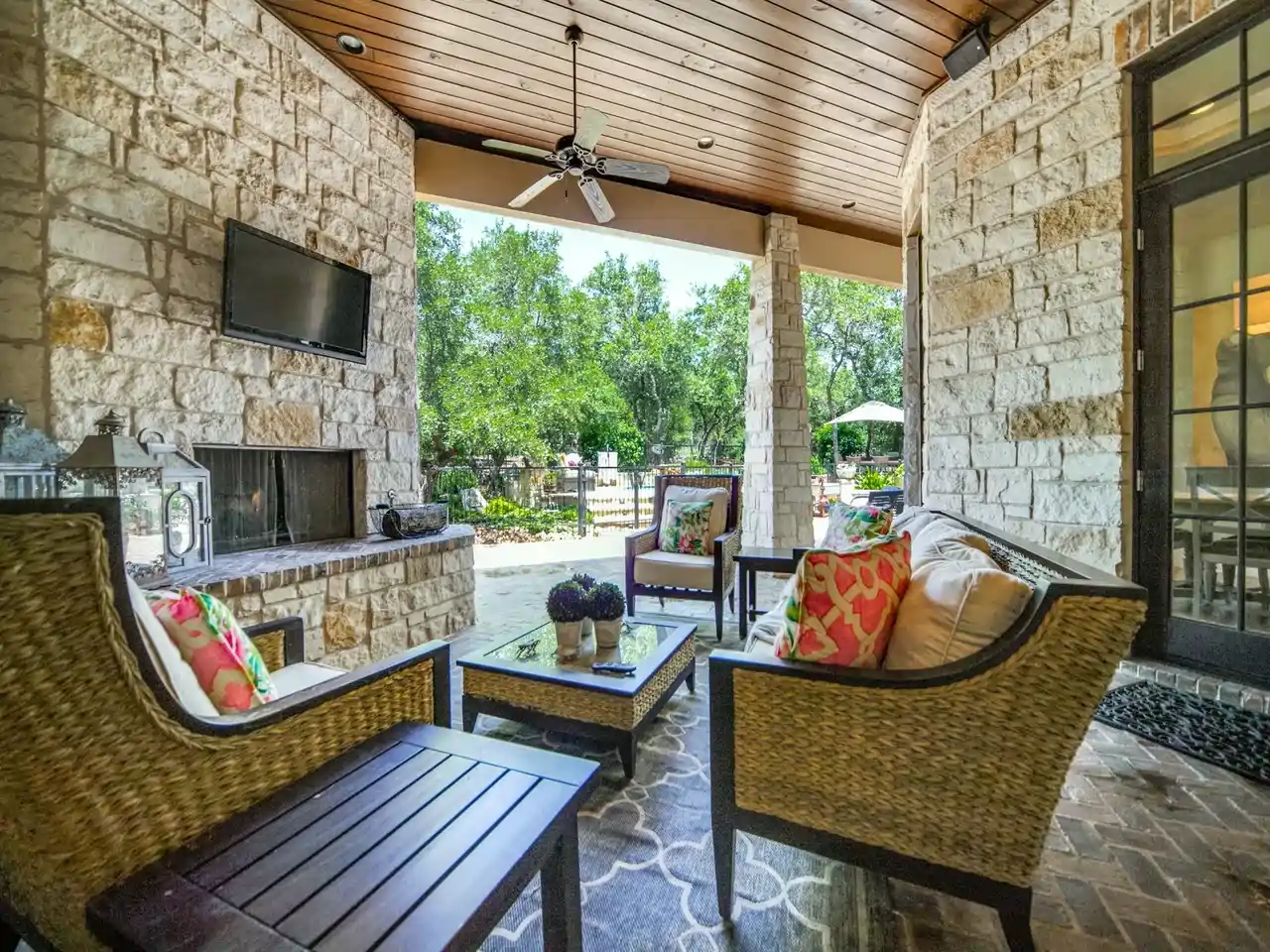
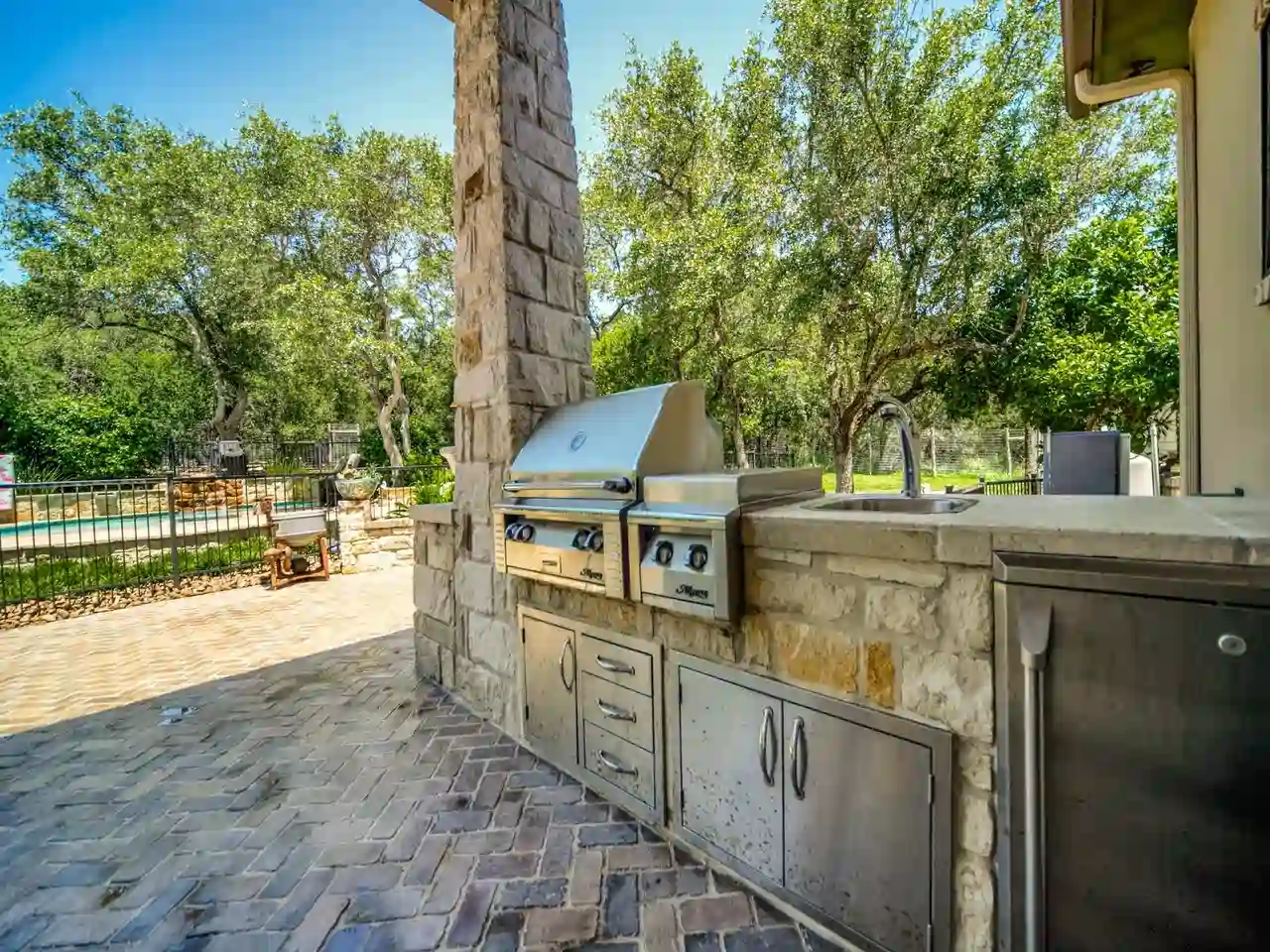
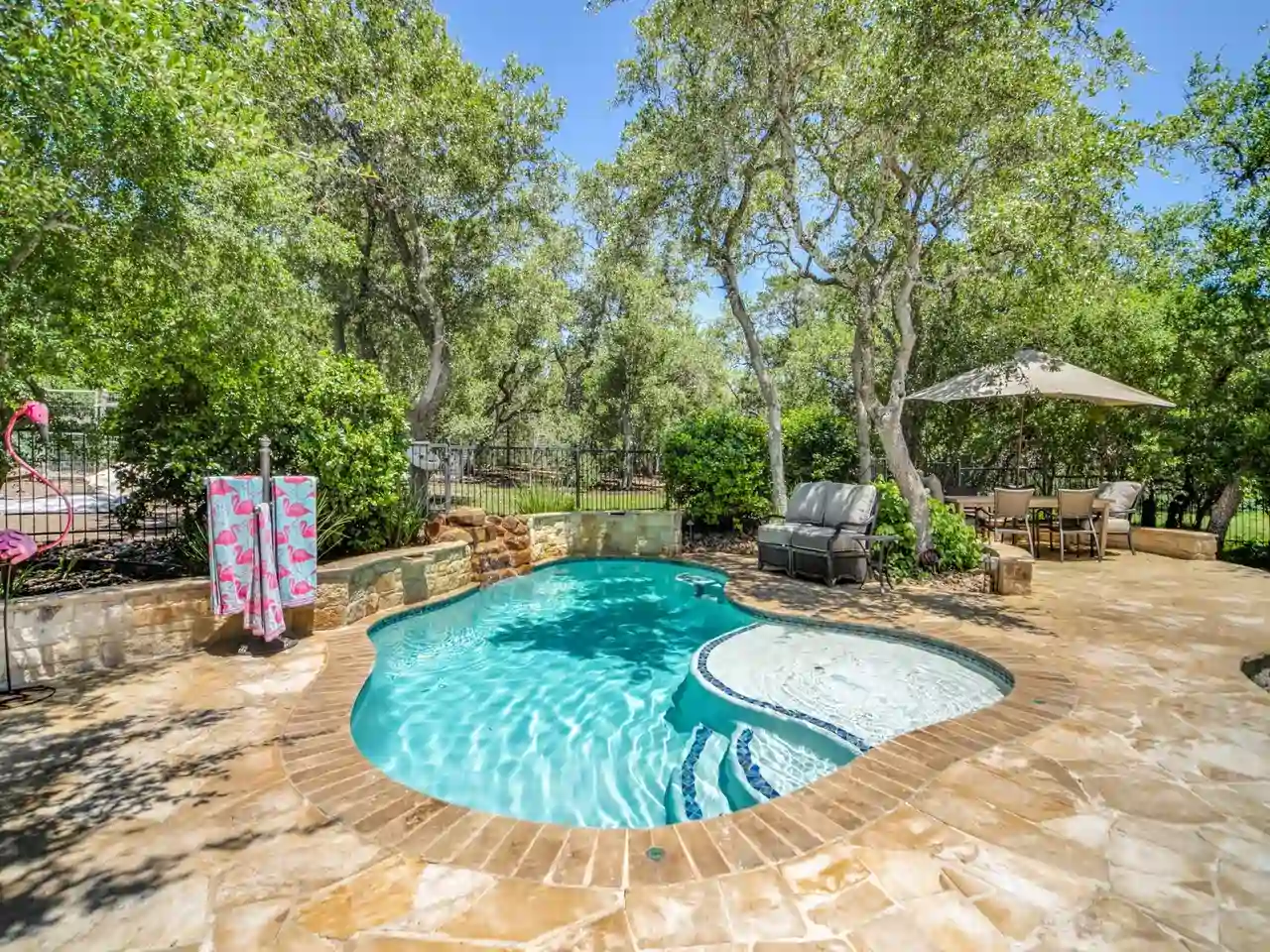
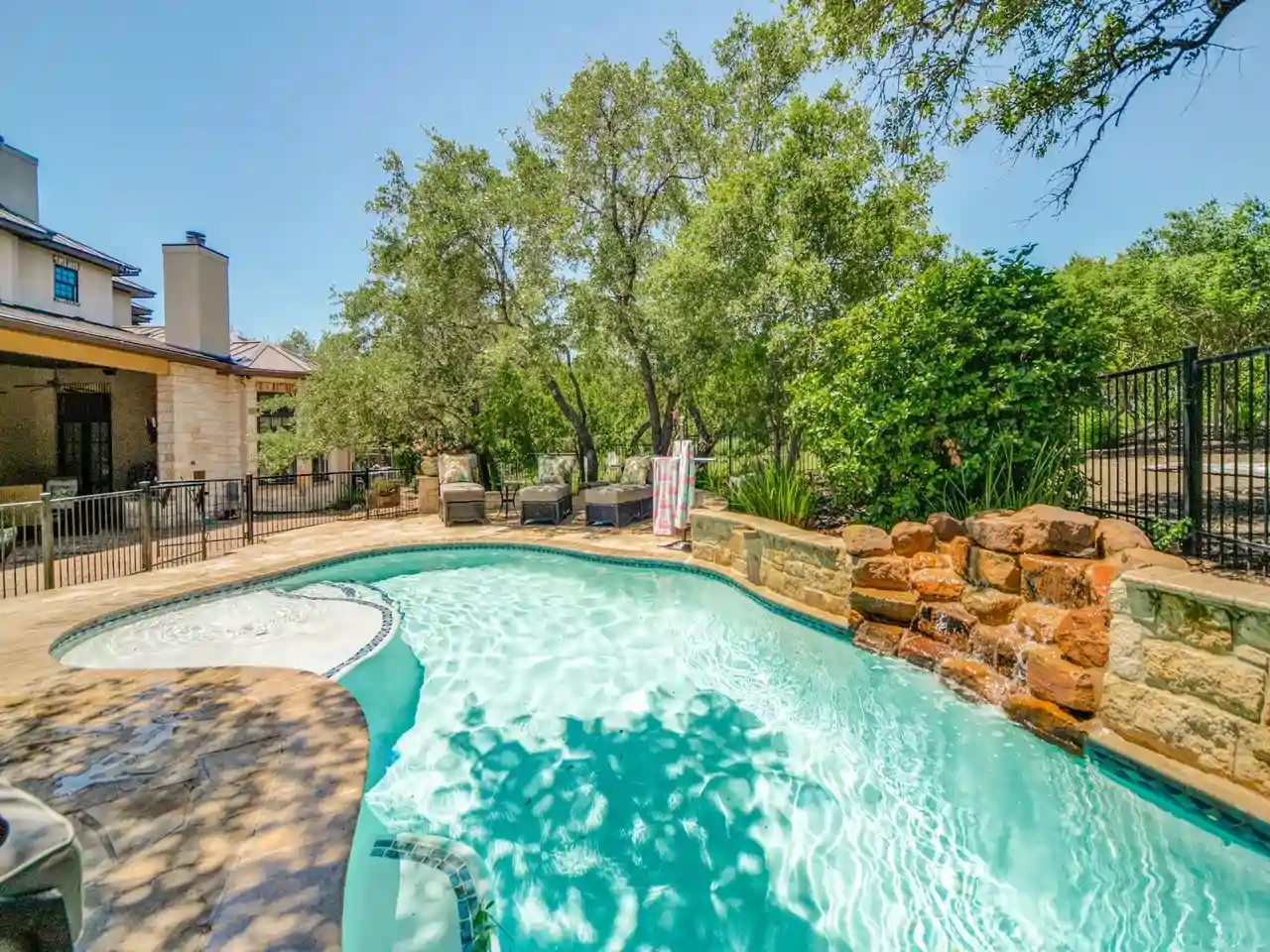
Devin Ward Elder maintained a large personal residence in San Antonio, Texas, funded in part by investor capital diverted from DJE Texas Management Group projects. The home featured a resort-style pool, outdoor entertaining area, gourmet kitchen, and high-end interior finishes consistent with the lavish lifestyle Elder projected to attract new investors.
Elder sold the property on March 7, 2025 — the same month he halted all investor distributions and notified investors that they should expect to lose a large portion of their principal. Following the sale, Elder moved into a rental house.
The timing of the home sale — days before or concurrent with the scheme's public collapse — raised immediate questions among investors and investigators about asset dissipation. The federal receiver appointed in February 2026 was tasked with identifying and recovering all assets traceable to investor funds, including personal property purchases made during the fraud period.
Boasting While Defrauding
While 345 investors awaited promised returns, Devin Elder posted social media videos celebrating his helicopter flights, rooftop parties at the Travis Building, and real estate "success" — all funded by investor capital.
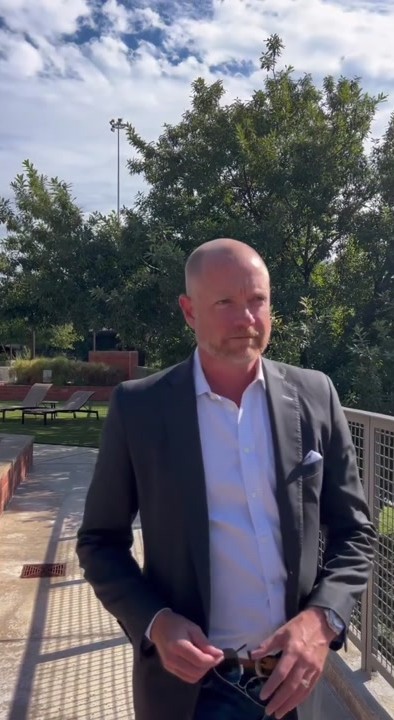
DJE Texas Management Group social media post promoting real estate portfolio and investment opportunities — posted during the peak of the fraud scheme.

Helicopter lunch excursion — casual display of the lavish lifestyle financed by the $66 million fraud targeting senior citizens and retirees.
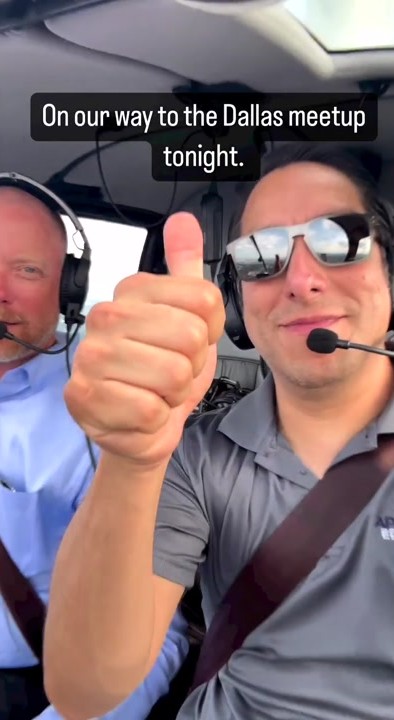
Flying to Dallas in his Robinson R44 (N244WB) — the camo-wrapped aircraft purchased through Get to the Choppa LLC, funded by investor capital.
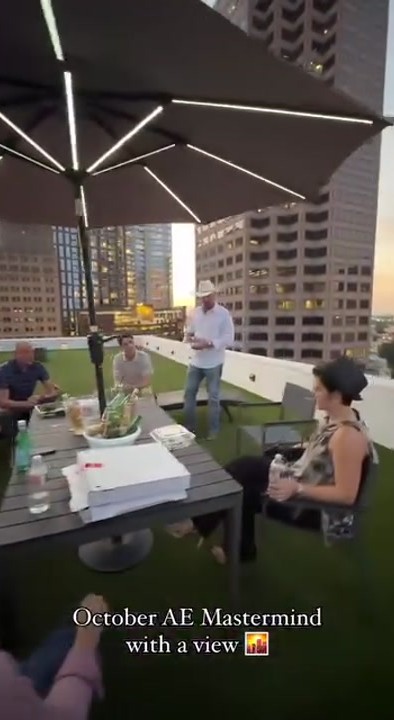
Celebrating on the Travis Building rooftop — purchased with $18.25M in investor-backed debt that later went into foreclosure.
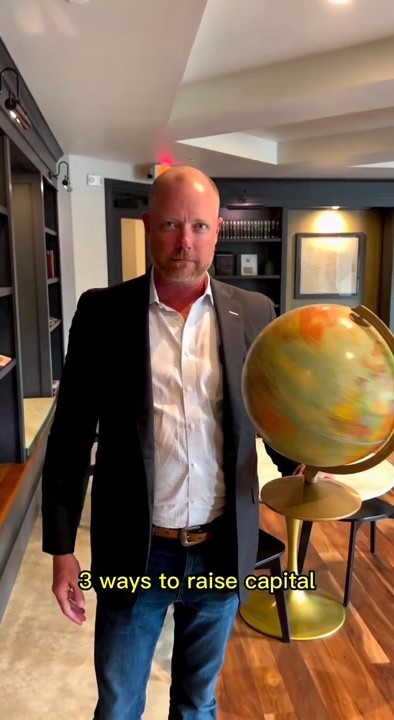
Explaining his investor recruitment strategy — the same tactics used to solicit $66 million from 345 victims through false promises.
§ 03 — The Fraud Scheme
How the Scheme Worked
From January 2023 to March 2025, Elder orchestrated a systematic fraud combining false promises, commingled funds, and Ponzi-style payments to deceive approximately 345 investors.
01
False Promises to Investors
Elder induced investors with material misrepresentations: funds would be used solely for the specific project promoted; he would personally "co-invest" his own money; no bank loans would encumber the real estate; 10% annualized interest paid monthly; and an 18-month maximum hold period for return of principal.
02
Private Placement Memoranda
For each of the 17 investment offerings, Elder created Private Placement Memoranda (PPMs) containing false and misleading statements. These documents — including the DJE Income Fund I, LLC PPM dated January 31, 2023 — were used to solicit investor funds, creating a veneer of legitimacy.
03
Commingling & Diversion of Funds
After investors wired money to project-specific accounts, Elder secretly transferred funds to a hidden entity — DJE Equity 01, LLC ("DJE Equity") — without investor knowledge. He concealed this account even from his own accountants, using it as a central pool to commingle funds across all 17 projects.
04
Ponzi-Style Interest Payments
Over the 26-month scheme, investors received approximately $8.8 million in payments described as "interest" and "principal." In reality, many of these payments consisted of funds from other investors rather than actual investment returns — a classic Ponzi structure.
05
Unauthorized Loans & Encumbrances
Contrary to his explicit promises of "cash deals" with no lenders, Elder obtained multiple bank loans using investor-owned properties as collateral. Known undisclosed loans include: (1) Brooks Business Park (Real Property 1, 9326 SE Loop 410) — $4,945,394 construction loan from Security State Bank, June 7, 2024. Elder kept the proceeds instead of repaying investors. The property was later foreclosed for $5.157M with zero investor recovery. (2) Leeds Building (345 W. Commerce St.) — $1,828,313 loan from First Citizens Bank, March 20, 2024 (Bexar County Doc# 20240052398). Elder withdrew $990,000 and diverted it to three unrelated projects. No improvements were ever made to the property. (3) Real Property 9 (11 Kendall Venture) — $1,855,000 loan from Jefferson Bank, February 27, 2024. All three loans were taken without investor knowledge or consent, directly violating the 'no lenders' promise in the PPMs.
06
Collapse & Investor Notification
In March 2025, Elder halted all interest payments. He notified investors that his businesses were facing financial difficulties, that projects would not be completed, and that they should expect to lose a large portion of their investments — leaving approximately $66 million in outstanding principal owed.
Three Claims Elder Made to Investors
"3 points are critical to our performance and our brand." Elder repeated these three claims as a common theme for his investment offerings. All three were false.
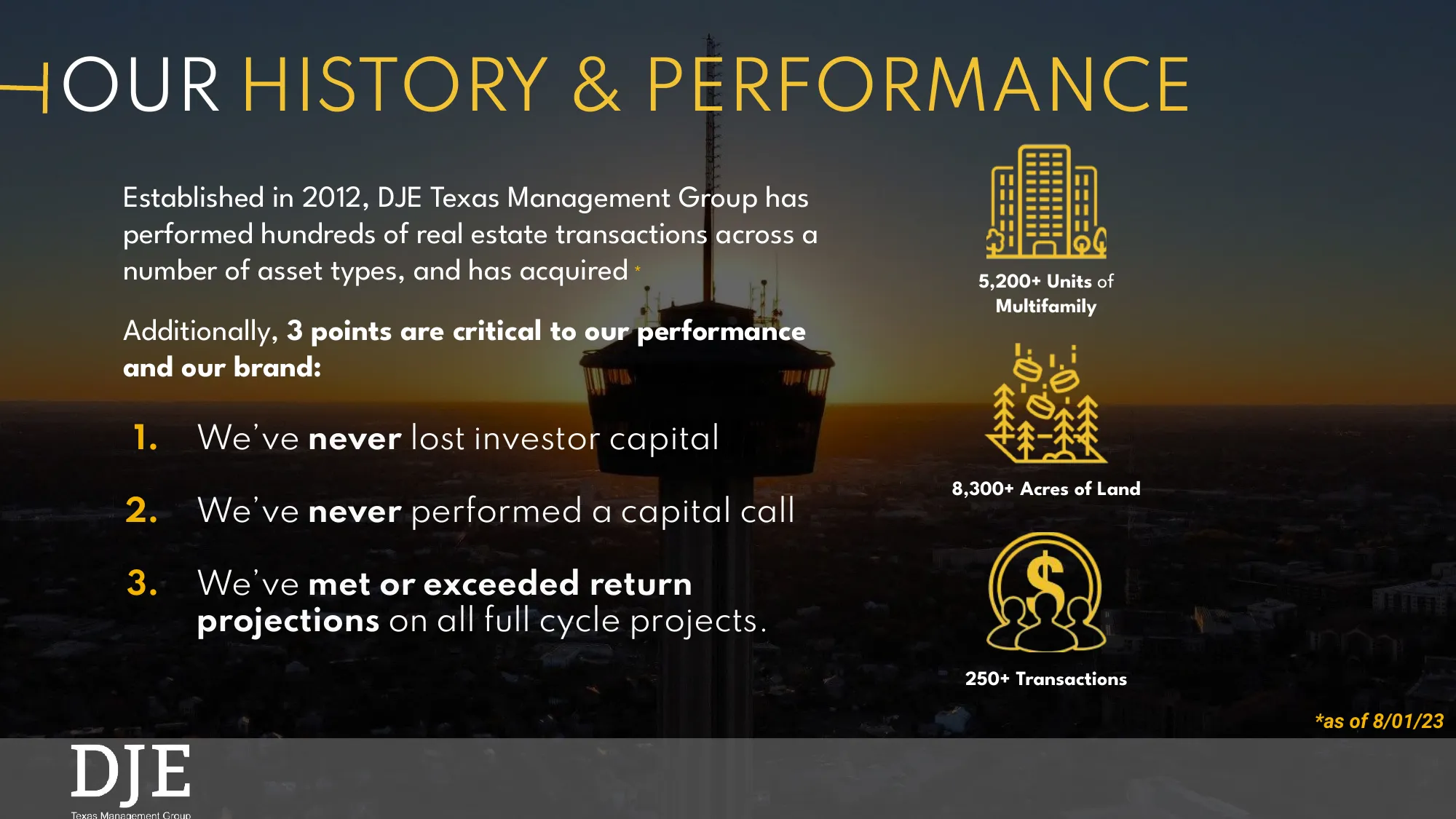
1.
"We've never lost investor capital."
345 investors lost approximately $66 million in principal. Elder's plea agreement states that as of March 2025, approximately $66,000,000 in outstanding principal remained owed to investors — none of which has been recovered.
2.
"We've never performed a capital call."
While technically no formal capital call was issued, Elder secretly commingled funds across all 17 projects through a hidden entity (DJE Equity 01, LLC), effectively using new investor capital to cover shortfalls in existing projects — the functional equivalent of an undisclosed capital call.
3.
"We've met or exceeded return projections on all full cycle projects."
Elder paid approximately $8.8 million in purported 'interest' and 'principal' payments using funds from other investors — a Ponzi structure. No project generated the returns promised. In March 2025, Elder told investors to expect to lose a large portion of their investments.
"We will not use any lender on this asset." ... "No lender = less risk."
Elder secretly obtained $4.9M (Security State Bank), $1.8M (First Citizens Bank), and $1.85M (Jefferson Bank) in undisclosed loans against investor properties.Total undisclosed debt placed on "debt-free" investments: $8.55 million.
Key Misrepresentations Made to Investors
- ✗Funds would be used solely for the specific project being promoted
- ✗Elder would personally "co-invest" his own money in each project
- ✗No bank loans would encumber the real estate ("cash deals")
- ✗10% annualized interest paid monthly with low risk
- ✗18-month maximum hold period for return of principal
- ✗Income Fund maintained 20% cash reserves
- ✗Income Fund invested in 7 industrial parks and other properties
- ✗DJE held mortgages on $8M+ of Texas land notes at 8–10%
§ 04 — The Income Fund PPM
DJE Income Fund I, LLC
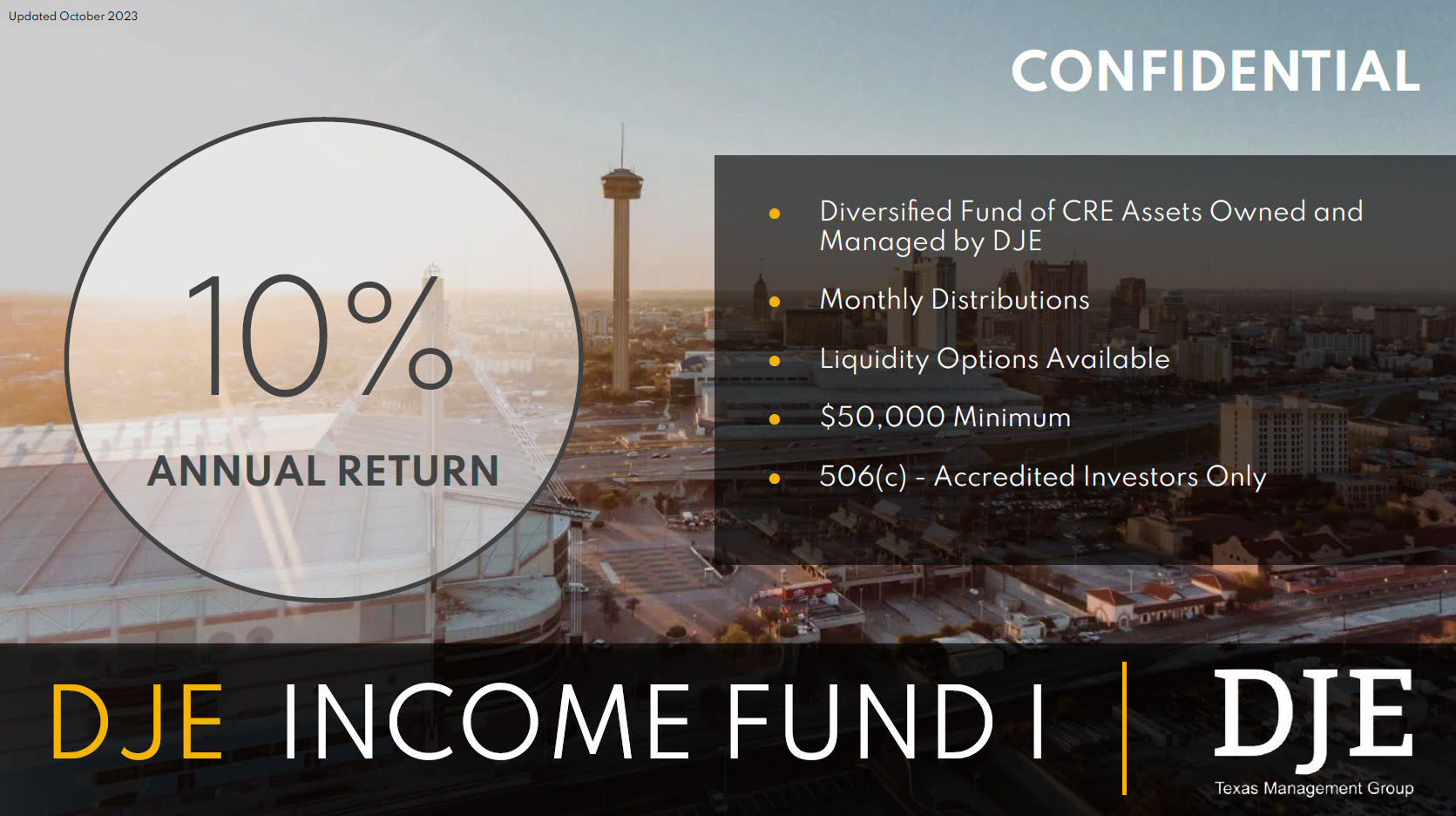
Elder's Private Placement Memorandum, dated January 31, 2023, promised accredited investors a 10% annual preferred return — while concealing the true nature of how funds would be used.
Exhibit: Investor Recruitment Lunch — Fleming's Prime Steakhouse, Plano TX — September 2024
In September 2024 — while the fraud scheme was already underway and investor funds were being misappropriated — Devin Elder and his DJE team hosted a lunch at Fleming's Prime Steakhouse & Wine Bar in Plano, Texas, to pitch the DJE Income Fund to a room of elderly investors. The September 10, 2024 Facebook post described it as a "fantastic lunch" to "connect and explore our Real Estate Fund." Elder continued soliciting new investor capital less than six months before the scheme collapsed in March 2025.
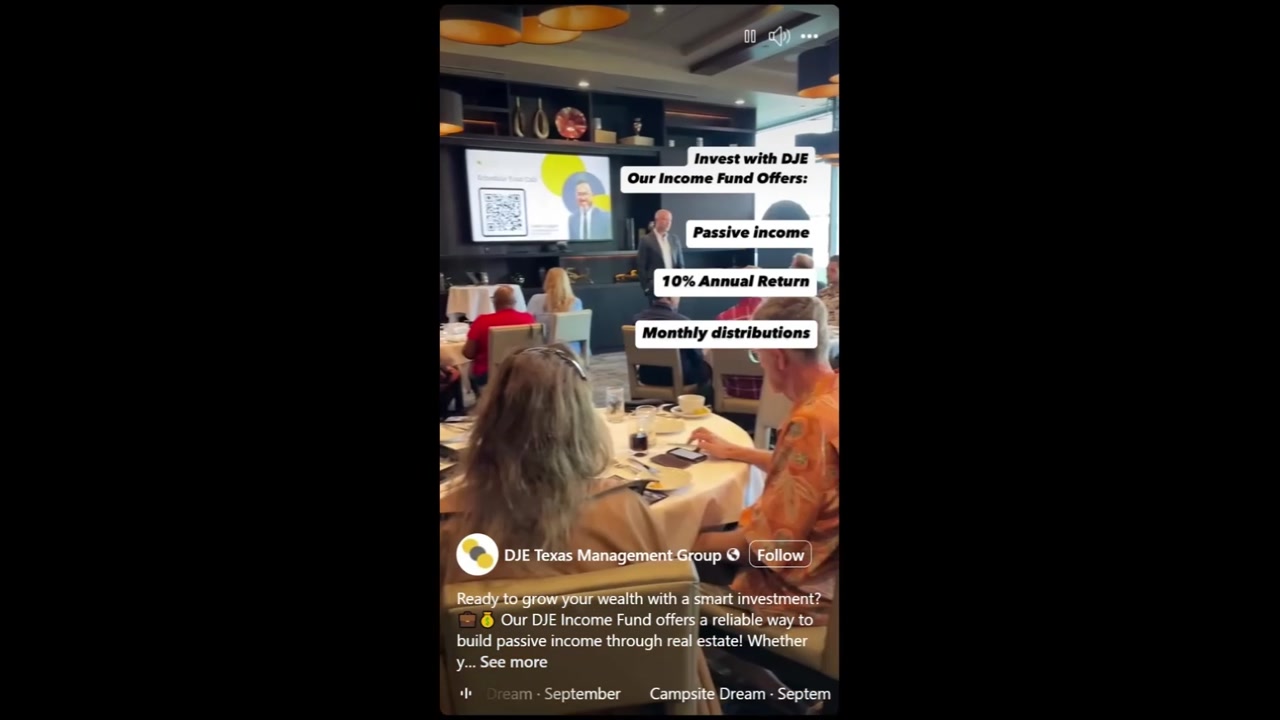
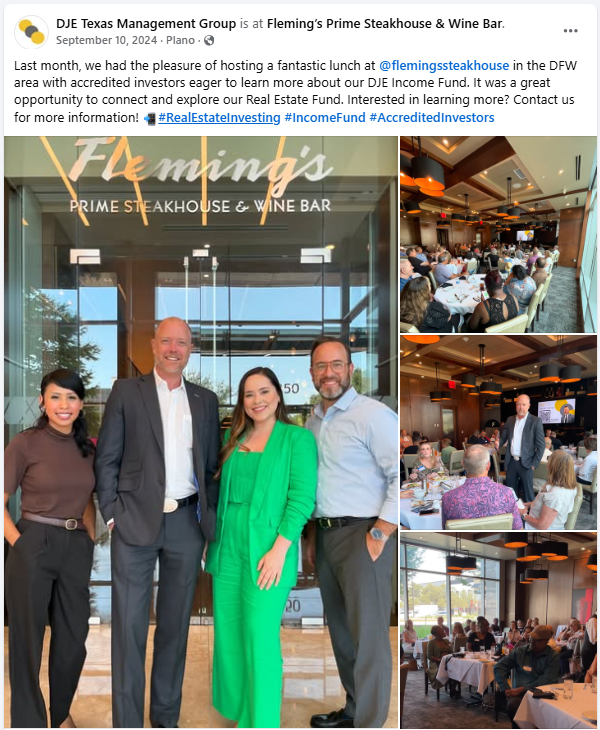
Exhibit A: DJE Facebook — November 13, 2024

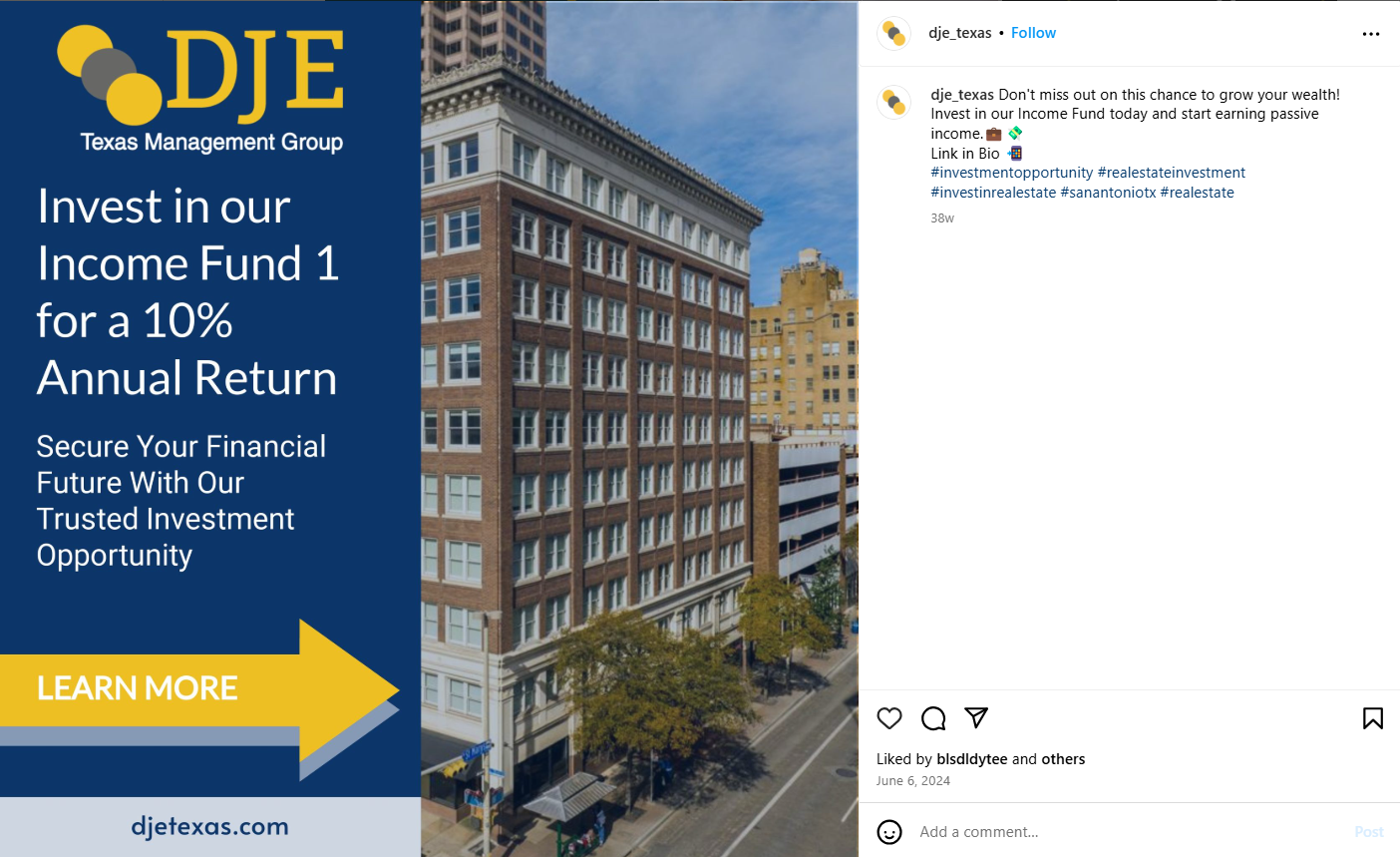
Exhibit B: DJE Instagram — June 6, 2024
 Investor Presentation SlideView PDF
Critical Fraud — Plea Agreement ¶¶36–41, pp. 15–17
(1) Multifamily investments were claimed to "provide a strong income stream to investors in the Income Fund" — they provided none.
(2) "Land purchases include an interest reserve escrow at closing to ensure consistent distributions" — the alleged escrow was used for interest payments to land deal investors, not the Income Fund.
(3) The fund held "$8M+ of Texas land notes at 8–10%" — those notes were pledged as collateral for a $5 million line of credit from Texas Partners Bank at 7.25%, making the promised 10% return mathematically impossible.
(4) Rollover transactions were paper-only: funds never actually moved into the Income Fund's bank account.
Elder raised over $7.5 million in cash and rolled over $12.5 million from other failing projects into DJE Income Fund — all while knowing the fund could not produce the returns he had promised.
"3 key data points are critical to our performance and our brand: 1. We've never lost investor capital. 2. We've never performed a capital call. 3. We've met or exceeded return projections on all full cycle projects."
All three claims were provably false. Written in October 2023 while the Ponzi scheme was already operating. By this date, Elder had already diverted millions in investor funds to personal use, taken out undisclosed loans against investor properties, and was using new investor money to pay "returns" to earlier investors.Every claim in this document was a deliberate misrepresentation to attract new capital.
§ 05 — Investment Projects
The 17 Investment Offerings
Elder created 17 separate investment offerings, each with its own LLC and Private Placement Memorandum. Fourteen acquired real property. The following categories summarize the major project groups.
Real Properties 1–8
Industrial Flex Space Projects
Eight industrial flex space offerings sharing an identical business model: Elder promised to purchase vacant land zoned for industrial use, build multiple 1,200 sq ft industrial flex units (each consisting of a small office, restroom, and storage space), lease them to small businesses, then obtain bank financing to repay investors — all within an 18-month maximum hold period, with the investment remaining debt-free until the bank takeout. Investors were promised 10% annual interest paid monthly, plus an additional 1.5% interest payment at exit.
Elder also falsely represented that he would invest $23.6 million of his own money across these eight projects. According to the plea agreement: "Elder did not have the money to invest in these projects as he represented. In fact, Elder did not contribute any of his own money into any of the projects, other than $300.00 in Real Property 1."
Real Property 1 (Brooks Business Park Venture LLC) was the only project where any construction was performed. In June 2024, Elder obtained a $4,945,394 construction loan from Security State Bank using Real Property 1 as collateral — directly contrary to his "no lender" promise. Rather than repaying investors, Elder kept the loan proceeds. On May 5, 2026, Security State Bank foreclosed on the property via substitute trustee sale (Bexar County Doc# 20260084750). The bank purchased the property at auction for $5,157,000. Result: zero return of investor capital.
Real Properties 2–8 remain vacant, unimproved land. After acquiring the properties, Elder did nothing to develop them. When the government sells these properties, investors may recover only a small fraction of their initial investment.
Real Properties 9–12
Land Projects
Four Texas ranch land investment projects collectively raised approximately $11 million from 143 victim-investors. Per the plea agreement (¶¶17–23, pp. 8–10), each project involved the purchase of between 11 and 500 acres of land near major Texas cities. The advertised strategy was to 'buy large tracts of land close to major Texas cities at a low price per acre, then market smaller tracts to a larger buyer pool at a higher price per acre.'
Each offering was advertised with a '12 or 18-month max hold period' and 10% annual interest paid monthly. Elder falsely represented these were 'cash deals' with 'no lenders' involved. Elder also falsely promised to personally invest between $250,000 and $350,000 of his own money into each project — a total false co-investment promise of $1.2 million across all four projects.
Investors were directed to wire funds to Eventide Land Holdings (ELH) bank accounts. Elder immediately transferred those funds to the DJE Equity bank account, then used comingled funds to acquire the properties and support other unrelated projects.
Real Property 9 (11 Kendall Venture): 34 investors wired $2.74 million to the Eventide Land Holdings (ELH) account at Jefferson Bank. Elder transferred $2.63 million to DJE Equity. On September 1, 2023, Elder wired $2,626,448.35 to Kendall County Abstract Company to purchase the property. On February 27, 2024, Elder took out a $1,855,000 loan from Jefferson Bank using Real Property 9 as collateral — directly contrary to his 'no lenders' promise — and transferred the loan proceeds to DJE Equity.
Real Properties 10–12: Elder engaged in the same or similar series of transactions. Elder obtained loans using Real Property 11 (500 Atascosa Venture) and Real Property 12 (453 Bee Venture) as collateral and used the proceeds to support other unrelated projects. For Real Property 10 (160 Atascosa Venture), Elder did not invest $250,000 of his own money as he had promised.
Real Property 13
345 Commerce Venture — Downtown San Antonio
A 10,500 sq ft, two-story mixed-use retail and office building at 345 W. Commerce Street (the Leeds Building) in downtown San Antonio. Between August 30 and September 7, 2023, Elder raised $1.2 million from 16 investors. Per the plea agreement (¶¶26–29, pp. 11–12), Elder falsely told investors that DJE would co-invest $1.64 million — bringing total capitalization to $2.84 million — to purchase the building and make capital improvements. DJE never invested $1,640,000. Elder also falsely promised investors a 'first-lien position,' 10% annualized interest paid monthly, an extra 2% at exit, and a 24-month maximum lock-up period. On March 20, 2024, Elder secretly took a $1,828,313 loan from First Citizens Bank using Real Property 13 as collateral — giving First Citizens Bank the first-lien position, not the investors. Elder withdrew $990,000 of the loan proceeds and deposited them into the DJE Equity bank account, then used those funds to pay expenses for three other unrelated projects. No improvements were ever made to the property. The Leeds Building remained an abandoned structure with plywood covering all the windows. Federal receiver Dan Kubinski sold the property to GXM Investments LLC for $1.4 million on March 9, 2026. After paying the First Citizens Bank lien, taxes, and receiver fees, no restitution has been returned to investors.
Real Property 14
214 Gonzales Venture — Ranch Land
214 Gonzales Venture involved the purchase of 214 acres of ranch land near a major Texas city. Per the plea agreement (¶31, p. 12), Elder raised $1.75 million from 14 victim-investors. The investment was advertised with a '12 month max hold period' and 10% annual interest paid monthly. Elder falsely represented that he would invest $200,000 of his own money in the project.
Investors were directed to wire funds to an Eventide Land Holdings (ELH) bank account. Elder transferred those funds to the DJE Equity bank account, then on April 16, 2024, wired $1,696,835.03 of comingled funds from DJE Equity to Capital Title of Texas to purchase the 214 acres.
Elder subsequently sold the 214 acres in smaller tracts but did not repay the victim-investors as promised. Elder never invested any of his own money in the project as he had represented.
DJE Income Fund
The "Income Fund"
The DJE Income Fund was marketed as a diversified investment vehicle with 20% cash reserves and 80% invested across land, multifamily, industrial, single family, and performing notes. Elder falsely claimed the fund had invested in 7 industrial parks, his Port Aransas beach house, single family homes, his office building, and multiple other projects.
Travis 2026 LLC
Travis Building — Downtown San Antonio
Elder raised funds to support operating costs on the Travis Building at 405 N. St. Mary's Street — a multi-story, 72,000 sq ft mixed-use retail and multifamily building already owned by Elder. Elder promised investors 7% annualized interest paid monthly plus an extra 14% when they exited, with a maximum 24-month lock-up period. Elder falsely represented that the building's debt was $12 million, its current value was $23.8 million, and there was an equity cushion of $7.8 million. Elder also opened Luz Roja, an upscale Tex-Mex restaurant on the River Walk level, in March 2025 — the same month he halted all investor distributions.
Bluemel Business Park LLC
Flex Space — Land Never Purchased
Bluemel Business Park LLC was a flex space investment project in which Elder raised approximately $3 million from 27 victim-investors between May 2023 and July 2024. Elder promoted it as an 18-month max hold period investment with 10% annual interest paid monthly plus an additional 1.5% at exit. Elder falsely stated in promotional PowerPoint presentations that 'we will not use any lender on this asset' and that he would invest $3.4 million of his own money. Investors wired funds directly into an Eventide Land Holdings (ELH) bank account, which Elder then transferred to DJE Equity.
§ 06 — Civil Lawsuits
Investor & Vendor Litigation
Before the federal criminal case, Elder and DJE Texas faced a cascade of civil lawsuits from defrauded investors, vendors, and real estate firms in Bexar County District Court.
October 7, 2025
Platte Canyon Capital (Denver, CO)
37th Civil District Court — Judge Nicole Garza · $1M+ in damages
Denver-based real estate firm sued Elder after purchasing The Allure apartment complex (268 units, 7770 Pipers Lane) in July 2025. Platte alleged DJE misrepresented occupancy as 90%+ when actual occupancy was 15% lower. DJE also allegedly kept its rent payment portal open for two months after closing, collecting more than $52,000 in rent that was never returned. Attorney David Denton wrote: "Elder's communications convey not refusal, but inability, to return what is in effect stolen rent."
October 13, 2025
Estanislao Gomez & Eve Marie Little
166th Civil District Court — Judge Laura Salinas · $160,000 invested
Two investors alleged misrepresentations in three industrial projects and one apartment investment. Gomez invested $100,000 in Brooks Business Park Venture LLC and Medina Business Park Venture LLC; Little invested $60,000 in Med Center Venture LLC (Helix apartment complex). Elder and former investor relations head Justin Liggitt allegedly inflated expected rates of return and failed to verify accredited investor status.
January 22, 2026
Three Rhinos LLC & Riley's Retirement Fund
285th Civil District Court — Judge Nadine Melissa Nieto · $200,000 invested
Fifth investor lawsuit filed by entities controlled by local attorney Charles Riley. Invested $100,000 each through Apartment Educators (AE), a seminar business co-owned by Elder and Ruben Dominguez. Alleged that Elder associates Dominguez, Ohm Culpepper, and Mark Biasiolli misrepresented the investment and failed to disclose that the Stratton Park Apartment project had been pledged as collateral for loans on other ventures.
Multiple dates, 2025
Various vendors and contractors
Bexar County District Courts · Various amounts
Multiple vendors and contractors filed suit as liens piled up against DJE properties. Luz Roja LLC owed $69,000+ to contractor Hermes Group. Platte Canyon Capital's lawsuit also alleged $52,000+ in stolen rent. The FBI's civil filing in Spring 2025 identified 13 properties for potential seizure, effectively freezing Elder's ability to sell those assets.
§ 07 — Impact on Victims
345 Defrauded Investors
Approximately 345 individuals invested their savings — including retirement funds — in what they believed were legitimate, low-risk real estate opportunities. The financial consequences were devastating.
Raised from approximately 345 investors across 17 investment offerings between January 2023 and March 2025.
The money judgment entered against Elder represents the outstanding principal owed to defrauded investors at the time of the guilty plea.
Over the 26-month scheme, investors received $8.8M in purported interest and principal — largely funded by other investors' money.
Specific Victim Examples from Court Record
The charged wire transfer — the specific act underlying the federal count — occurred on February 21, 2024, when Elder caused $600,000 of victim J.G.'s investment funds to be transmitted via wire from Ally Bank (Sandy, Utah) to Jefferson Bank (San Antonio, Texas).
Investor Estanislao Gomez invested $100,000 of his retirement savings in DJE projects. Court filings state Elder was aware of the financial struggles broadly affecting his empire at the time he was still soliciting Gomez's investment in January 2025 — yet this material risk was never disclosed.
Investor Eve Marie Little invested $60,000 in Med Center Venture LLC. She was promised a 7% annual rate of return and a profit share upon project completion. As of the lawsuit filing date, her principal had not been returned. The properties were subsequently acquired by private creditor Lument.
In March 2025, Elder abruptly halted all payments and informed investors they should expect to lose a large portion of their investments. Over $66 million in principal remained outstanding.
§ 07B — Your Voice Matters
Submit a Victim Impact Statement
All 345 victims are encouraged to submit a written statement directly to the sentencing judge before December 16, 2026. Your statement is one of the most powerful tools available to ensure the court understands the full human cost of this fraud.
TIME-SENSITIVE — ACT NOW
Sentencing is December 16, 2026. Your statement must reach the court before that date.
Federal judges are required by law (18 U.S.C. § 3771, the Crime Victims’ Rights Act) to consider victim impact statements before imposing a sentence. The more statements the judge receives, the more complete the record of harm — and the greater the weight it carries at sentencing. Statements submitted after the hearing date cannot be considered. Do not wait. Every day you delay is a day closer to the deadline.
Why Your Statement Matters
Federal judges must consider victim impact statements before sentencing under the Crime Victims’ Rights Act. A single powerful statement can shift the judge’s understanding of the harm caused. 345 statements create an undeniable record.
The more clearly you document your financial losses — principal invested, lost returns, medical costs, lost wages, and downstream financial harm — the stronger your position in the restitution calculation. Vague claims receive less weight than specific, documented ones.
Victim impact statements become part of the permanent federal court record. They are reviewed by the probation officer preparing the Pre-Sentence Investigation Report, which the judge relies on heavily. Your words will be read by the judge before he decides the sentence.
What to Include in Your Statement
Your statement should describe how this crime has affected you and your family. You may refer to the sample questions in the Information Regarding Your Victim Impact Statement PDF below as a guide.
Financial harm: Exact dollar amount invested, promised returns, actual losses, impact on retirement savings, college funds, housing, or business plans. Include any downstream losses such as forced home sales, missed investment opportunities, or debt incurred to cover the shortfall.
Mental & physical health: Anxiety, depression, sleep disorders, stress-related illness, or any medical or mental health treatment sought as a result of this fraud. Lost wages from treatment time may be included in restitution.
Relationship and family impact: Strain on marriage or family relationships, inability to support dependents, impact on children’s education or future, and any changes to your family’s standard of living.
Trust and sense of security: How the fraud has affected your ability to trust financial advisors, invest in the future, or feel secure in your financial decisions going forward.
How you were solicited: If Elder or DJE Texas representatives made specific promises to you personally — in writing, by phone, or in person — describe those representations. This corroborates the scheme.
Ongoing fear or distress: Any continuing sense of unrest, fear of future financial instability, or psychological impact that persists today.
We ask that you refrain from expressing wishes of harm toward the defendant; however, you are welcome to share any feelings of fear, distress, or ongoing sense of unrest related to the incident.
Submit Your Statement
Completed victim impact statements should be sent directly to the U.S. Department of Justice victim-witness coordinator for this case. The deadline is before the December 16, 2026 sentencing hearing.
SEND YOUR STATEMENT TO
Victim Resources — View & Review Before Writing
Legal Proceedings
| Charge | Wire Fraud — 18 U.S.C. § 1343 |
| Count | One (1) |
| Max Prison Term | 20 years |
| Mandatory Minimum | None |
| Max Supervised Release | 3 years |
| Max Fine | $250,000 or 2× gross gain/loss |
| Monetary Assessment | $100 |
| Money Judgment | $66,000,000 |
| U.S. Attorney | Justin R. Simmons |
| AUSA (Lead) | William R. Harris |
| AUSA | Steven Seward |
| AUSA | Ray Gattinella |
| Defense Attorney | John S. Gilmore, III |
| Presiding Judge | Hon. Fred Biery |
| Receiver | Dan Kubinski, Crowned Eagle Realty LLC |
| Investigating Agency | Federal Bureau of Investigation (FBI) |
As part of the plea agreement, Elder agreed to forfeit 13 real properties across multiple Texas counties, plus a $66 million money judgment. A receiver (Dan Kubinski, Crowned Eagle Realty LLC) was appointed to sell approximately 21 properties totaling more than 1,000 acres.
Elder entered a Rule 11(c)(1) non-binding plea agreement, meaning the court is not bound by any sentencing recommendation from the parties.
Elder agreed to full restitution in an amount to be determined by the Court, jointly and severally with any other defendants ordered to pay restitution.
Elder agreed not to contest the administrative, civil, and/or criminal forfeiture of all subject properties and waived all constitutional, legal, and equitable defenses to forfeiture.
A $66,000,000 money judgment was entered, representing the value of proceeds obtained directly or indirectly as a result of the wire fraud violation.
"Elder and DJE used investors' money to make purported 'interest' payments and other payouts to other investors in order to make the projects appear to be successful, thereby inducing additional investments and concealing the misuse of funds from other investors."
The Department of Justice's own characterization of the Ponzi mechanic at the heart of the scheme. Elder used new investor capital to fabricate the appearance of legitimate returns, concealing that the underlying projects were undeveloped and the funds had been misappropriated.This is the textbook definition of a Ponzi scheme, stated in a federal charging document.
Chronology of Events
March 2015
DJE Texas Management Group, LLC founded
Elder establishes his San Antonio-based investment firm, which would grow to employ dozens of people and control ~2,500 apartment units, flex industrial buildings, and thousands of acres of Texas land.
January 31, 2023
DJE Income Fund I PPM issued
Elder issues the Private Placement Memorandum for DJE Income Fund I, LLC — promising accredited investors a 10% annual preferred return, $50,000 minimum investment, and an "evergreen" perpetual fund structure.
January 2023
Fraud scheme begins
Elder begins fraudulently raising money from investors across 17 real estate investment offerings, using false PPMs and misrepresentations about fund usage, co-investment, and debt-free structures.
February 21, 2024
Charged wire transfer — victim J.G.
Elder causes $600,000 of victim J.G.'s investment funds to be transmitted via wire from Ally Bank (Sandy, UT) to Jefferson Bank (San Antonio, TX). This specific transaction forms the basis of the federal wire fraud charge.
March 2024
Leeds Building secretly encumbered with $1.83M loan
Elder obtains a $1,828,313 construction loan from First Citizens Bank against the Leeds Building (345 W. Commerce St.) without investor knowledge or consent (Bexar County Doc# 20240052398). No improvements were ever made to the property. The loan proceeds were diverted elsewhere while investors believed the property was unencumbered.
June 2024
Unauthorized construction loan obtained
Elder secures a $4,945,394 construction loan from Security State Bank using Real Property 1 as collateral — directly contrary to his promises to investors of "no loans."
September 10, 2024
DJE Income Fund pitched to elderly investors at Fleming's Steakhouse
While the fraud scheme was already underway, Elder and his team hosted a complimentary lunch in a private banquet room at Fleming's Prime Steakhouse & Wine Bar in Plano, Texas, specifically targeting elderly and retired investors for the DJE Income Fund. Elder delivered a presentation promising 10% annual returns and a diversified 'evergreen' fund structure. The DJE Facebook page later described it as a 'fantastic lunch' to 'connect and explore our Real Estate Fund.' The Facebook page has since been deleted.
November 13, 2024
DJE Facebook ad: "10% Returns — Income You Can Depend On"
DJE Texas Capital Fund posts a Facebook ad promising "10% IRR" with a $50,000 minimum investment and the tagline "Income You Can Depend On" — while the scheme is already underway and investor funds are being commingled.
February 2025
Elder tells investors of "economic headwinds"
Elder tells investors he is "taking measures to maintain viability" in the face of economic headwinds. He announces plans to reduce staff and halt acquisitions — the first public signal of trouble.
March 2025
Luz Roja restaurant opens on River Walk
Elder opens Luz Roja, an upscale Tex-Mex restaurant at 405 N. St. Mary's St. in the Travis Building on the San Antonio River Walk. The restaurant opens the same month Elder halts investor distributions.
March 2025
Scheme collapses — payments halted
Elder stops making interest payments to all investors. He notifies them of financial difficulties, that projects will not be completed, and that they should expect to lose a large portion of their investments. ~$66M in principal remains outstanding.
Spring 2025
FBI opens criminal investigation
The FBI opens a criminal investigation into DJE Texas Management Group for potential money laundering and wire fraud. A civil filing identifies 13 properties for potential seizure, effectively freezing Elder's ability to sell those assets.
Summer 2025
Travis Building foreclosed by UC Funds
Boston-based UC Funds assumes control of the Travis Building in a foreclosure sale after DJE defaulted on an $18.25 million loan. UC Funds wins the auction for $16.7 million.
October 7, 2025
Platte Canyon Capital sues for fraud & theft
Denver-based Platte Canyon Capital sues Elder for breach of contract and fraud over the sale of The Allure apartment complex, alleging misrepresented occupancy rates and $52,000+ in stolen rent.
October 10, 2025
Luz Roja closes with 5 days' notice
Elder closes Luz Roja with just five days' notice to staff. The restaurant owes $69,000+ to contractor Hermes Group. A former employee: "I have not seen or heard from Devin since April. They were putting $0 into the restaurant."
January 22, 2026
Fifth investor lawsuit filed
Entities controlled by attorney Charles Riley file the fifth investor lawsuit, alleging misrepresentation in a $200,000 investment in a North Side apartment complex through Apartment Educators.
January 28, 2026
Federal charge filed & plea agreement signed
The U.S. files a one-count Information charging Elder with Wire Fraud (18 U.S.C. § 1343). Elder signs the plea agreement the day before. Case No. 5:26-cr-00038-FB, U.S. District Court, Western District of Texas, before Judge Fred Biery.
February 9, 2026
Receiver appointed to sell 21 properties
The U.S. Attorney's Office moves to appoint Dan Kubinski of Crowned Eagle Realty LLC as receiver for 21 Elder-owned properties totaling more than 1,000 acres across San Antonio and South Texas.
February 17, 2026
Guilty plea entered in federal court
Elder appears in U.S. District Court and formally pleads guilty to one count of Wire Fraud. He faces up to 20 years in federal prison and must repay $66 million to victims.
April 10, 2026
Foreclosure proceedings sought on Brooks Business Park
Security State Bank asks Judge Biery to approve foreclosure on Brooks Business Park (9326 SE Loop 410), seeking recovery of $5.7 million. The property has been listed at $6.4M with no satisfactory offers.
May 5, 2026
Brooks Business Park foreclosed — zero investor recovery
Security State Bank forecloses on Brooks Business Park (Real Property 1) via substitute trustee sale. Bank purchases at auction for $5,157,000. Elder had obtained a $4,945,394 loan on June 7, 2024 and kept the proceeds instead of repaying investors. Result: zero return of investor capital. (Bexar County Doc# 20260084750)
May 2026
Terrell Hills & Port Aransas properties sold
Receiver sells 825 Eventide Dr., Terrell Hills for $754,000 and 717 Sunrise Ave., Port Aransas (beach house) for $850,000. Proceeds flow toward the $66M restitution obligation.
May 28, 2026
Last Atascosa County acreage sold — $569,880
94.98 acres (500 Atascosa Venture LLC) sold to Kenny and Dana Everett for $569,880. Net to receivership: ~$528,000. Source: SABJ.
June 2–3, 2026
Bakkt cryptocurrency garnishment ordered
The U.S. files an Unopposed Application for Prejudgment Writ of Garnishment (Doc. 49) against Bakkt Trust Company LLC and Bakkt Holdings Inc. to seize Elder's cryptocurrency holdings. Elder consented. Judge Fred Biery signs the order on June 3, 2026 (Doc. 54).
June 11, 2026
Travis Building sold to Horseshoe Bay Resort owner
The Travis Building (405 N. St. Mary's St., 63 apartments) sells to the owner of Horseshoe Bay Resort. Buyer takes a $10.8M loan from UC Funds. UC Funds had foreclosed after Elder defaulted on an $18.25M loan; UC Funds bid $16.7M at auction. Appraised value: ~$12.9M. Source: SABJ / James McCandless.
June 11, 2026
Culebra Business Park (4335 Culebra Rd.) liquidated — 88% investor loss
The federal receiver sells the Culebra Business Park property (Real Property 2, 4335 Culebra Rd.) for $650,000. The property was raw, unimproved land — no construction or improvements were ever made despite 49 investors contributing $5 million. After fees and taxes, approximately $580,000 is expected for victim restitution — an 88.4% loss of investor capital. (Case 5:26-cr-00038-FB, Doc. filed June 11, 2026)
June 11, 2026
Medina Business Park (SW Loop 410 & Medina Base Rd.) liquidated — 78% investor loss
The federal receiver sells the Medina Business Park property (raw, unimproved land near Lackland AFB) for $800,000. No construction or improvements were ever made despite investors contributing $3 million. After fees and taxes, approximately $660,000 is expected for victim restitution — a 78% loss of investor capital. (Case 5:26-cr-00038-FB, Doc. filed June 11, 2026)
June 15, 2026
210 Fantasia, Bexar County — residential rental sold
The federal receiver sells 210 Fantasia (3br/2ba single-family home, Alamo 678 Holdings LLC) for $235,000. The property had a sloped backyard, enclosed back porch flooding during heavy rains, and needed paint, repairs, flooring, and backyard trenching. After satisfying the Shellpoint Mortgage lien, approximately $38,000 is expected for victim restitution. (Case 5:26-cr-00038-FB, Doc. 59, filed June 15, 2026)
June 26, 2026
630 Rocklyn Dr., Windcrest — sale confirmed by court order
U.S. District Judge Fred Biery signs an order confirming the sale of 630 Rocklyn Drive, Windcrest TX 78239 to Big Contracting and Construction LLC for $305,000. The receiver spent $17,330.95 in repair and preservation expenses. Net proceeds to be distributed after satisfying the Jefferson Bank lien. (Case 5:26-cr-00038-FB, Doc. 64, filed June 26, 2026)
July 7, 2026
Lender sues over Preston Apartments — seeks receiver
A lender files suit alleging The Preston Apartments (3200 Thousand Oaks Dr., San Antonio) defaulted on a nearly $7.3 million mortgage loan after missing monthly payments. The lawsuit alleges the complex has been abandoned, leaving it vulnerable to further deterioration and squatters. The property, owned by 3200 Thousand Oaks LLC (an Elder-affiliated entity involuntarily terminated in September 2025), had already been evacuated in April 2026 after stairs collapsed and two tenants fell through. Source: San Antonio Express-News.
Aug 31, 2026
Sentencing continued to December 16, 2026
Judge Fred Biery grants Elder's unopposed motion to continue sentencing (Doc. 84) and resets the hearing for December 16, 2026 at 9:00 AM in Courtroom G, Third Floor of the U.S. Courthouse, 262 W. Nueva St., San Antonio (Order Resetting Sentencing, Doc. 85). Elder’s motion cited pending asset sales that would not finalize before September 9 and requested a 60-day continuance "to maximize restitution to the victims prior to sentencing"; the reset date fell 98 days out.
Sep 4, 2026
Bakkt answers the garnishment — four frozen accounts, roughly $68,700
Bakkt Financial Solutions I, LLC (formerly Bakkt Crypto Solutions) files its sworn Answer of Garnishee (Doc. 86): four DJE-entity accounts — DJE Properties LLC, DJE Texas Management Group LLC, DJE Equity 01 LLC, and The DJE Foundation Limited — all suspended and trade-restricted as of July 20, 2026, holding approximately $68,700 in cryptocurrency and cash, nearly all of it in the DJE Texas account. The filing records Bitcoin withdrawals from two of the accounts on March 6 and May 16, 2025, and states Bakkt anticipates owing Elder nothing further.
Sep 28, 2026
1512 Wyoming condos sold for $640,000 — nothing for victims
Judge Fred Biery confirms the receiver’s sale of two 3-bedroom condominiums at 1512 Wyoming Street, San Antonio (Order Confirming Sale, Doc. 94). The government’s motion (Doc. 93) states the units were listed at $479,000 each until roof, sheetrock, and wall problems were found. After the Jefferson Bank lien, brokerage, taxes, and closing costs there are no net proceeds; the order sends what remains "to partially satisfy the lien of Jefferson Bank." The first confirmed sale on the record that returns nothing to victims.
Dec 16, 2026
Upcoming
Sentencing scheduled
Elder is scheduled to be sentenced on December 16, 2026 at 9:00 AM before Judge Fred Biery in Courtroom G at the U.S. Courthouse, 262 W. Nueva St., San Antonio, TX 78207 — continued from the original September 9, 2026 setting on Elder's unopposed motion (Doc. 85). Maximum sentence: 20 years.
The Leeds Building sold on March 9, 2026. Federal receiver Dan Kubinski conveyed the property to GXM Investments, LLC for $1.4 million by Special Warranty Deed (Doc# 20260042778, Bexar County Clerk). After paying the First Citizens Bank lien, taxes, and receiver fees, the net proceeds available to investors have not resulted in any restitution to investors.
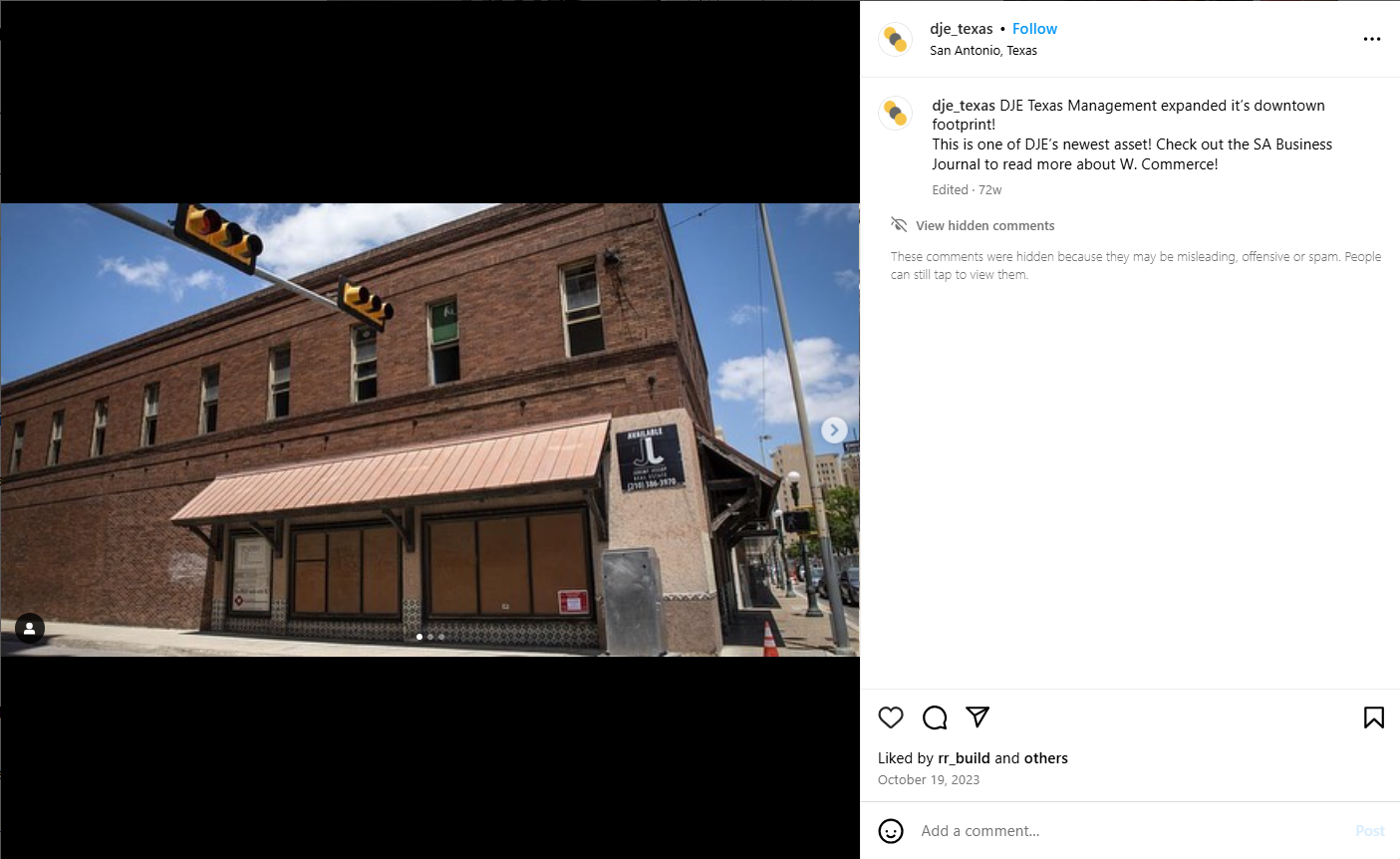
"None of these [other offers] would have resulted in monies being available for the benefit of victims, as the Property is subject to a pre-existing lien in favor of First Citizens Bank."
Elder acquired the two-story Leeds Building at 345 W. Commerce Street in downtown San Antonio in 2023, touting it as an expansion of DJE's downtown footprint. The property was held by 345 Commerce Venture, an eponymous LLC entity connected to Devin Elder. The building is a two-story mixed-use structure in the heart of downtown San Antonio.
In March 2024, Elder secretly encumbered the property with a $1,828,313 construction loan from First Citizens Bank (Doc# 20240052398, Bexar County) — yet no improvements were ever made to the property. The Leeds Building remained an abandoned structure with plywood covering all the windows. Elder withdrew $990,000 of the loan proceeds and deposited them into the DJE Equity bank account, then used those funds to pay expenses for three other unrelated projects.
On February 24, 2026 — just days after Elder's guilty plea on February 17 — the government filed in the U.S. Western District of Texas to sell the Leeds Building to GXM Investments, LLC, an entity affiliated with Gerard Morales, founder and CEO of private security firm Texas Veteran Security, for approximately $1.4 million. The deal was reportedly worked out before federal prosecutors filed charges.
Judge Fred Biery approved the sale, and receiver Dan Kubinski of Crowned Eagle Realty LLC conveyed the property to GXM Investments, LLC by Special Warranty Deed on March 9, 2026 (Doc# 20260042778, Bexar County Clerk, Lucy Adame-Clark). Kubinski was appointed by the U.S. Attorney's Office to liquidate 21 Elder-connected properties across South Texas.
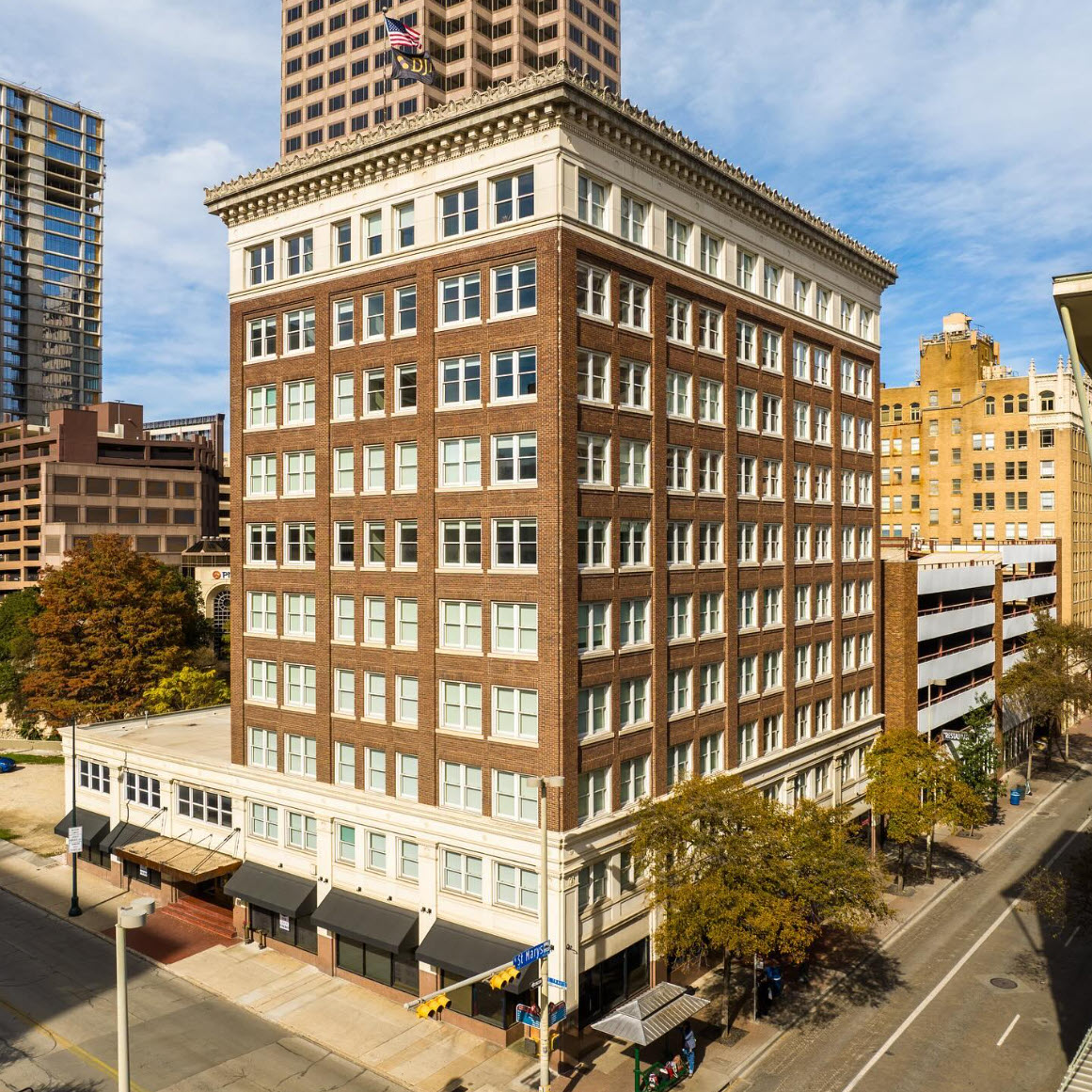
The Travis Building at 405 N. St. Mary's Street — a historic 10-story, 250,000 sq. ft. building constructed in 1920 and converted by DJE into 63 apartments with 20,000 sq. ft. of office/retail — was the first San Antonio project to receive PACE funding ($5M). DJE completed the conversion in 2023 after taking over the project from California-based Harris Bay.
By April 2025, DJE had defaulted on an $18.25 million loan from UC Lending (originated 2020). A foreclosure notice was filed with Bexar County, with an auction scheduled for May 6, 2025 at the Bexar County Courthouse. The Bexar Central Appraisal District valued the property at $12.9M.
Boston-based UC Funds ultimately won the foreclosure auction for $16.7 million, taking control of the building. On June 11, 2026, the Travis Building sold again to the owner of Horseshoe Bay Resort, who took out a $10.8M loan from UC Funds to acquire it. The Bexar Central Appraisal District values the parcel at approximately $12.9M. DJE's biography had boasted: "No Investor or Lender Capital Lost on Any Transaction Ever."
Sources: The Real Deal (Apr. 24, 2025) · SABJ "Local real estate firm's financial troubles leave investors in limbo" (Apr. 24, 2025) · SABJ "Horseshoe Bay Resort owner buys foreclosed downtown apartments" (James McCandless, June 11, 2026)
In February 2025, Elder shifted investor distributions from monthly to quarterly, citing interest rates and "economic headwinds." He announced layoffs, a halt to acquisitions, and the listing of DJE's downtown headquarters for sale. He promised "more frequent, shorter real-time updates" — then parted ways with Head of Investor Relations Justin Liggitt.
By April 2025, investors told the San Antonio Business Journal they could not reach anyone at DJE in any meaningful way. One investor — who declined to be named for fear of legal action — said hundreds of thousands of dollars, including a portion of their 401(k), were in limbo.
"Where we're at right now is we have no idea what's going to happen with our money, where our money is at and we're just at the mercy of them to ever decide to respond."— Anonymous DJE investor, SABJ April 2025
"There are guys out there with meaningful amounts of money that are holding the bag. I don't know where we're going to go with this thing."— Second anonymous DJE investor, SABJ April 2025
Investors also reported filing complaints with the Texas Attorney General's office and the Securities and Exchange Commission (SEC).
Source: SABJ — "Local real estate firm's financial troubles leave investors in limbo, properties at risk" · Apr. 24, 2025 · James McCandless
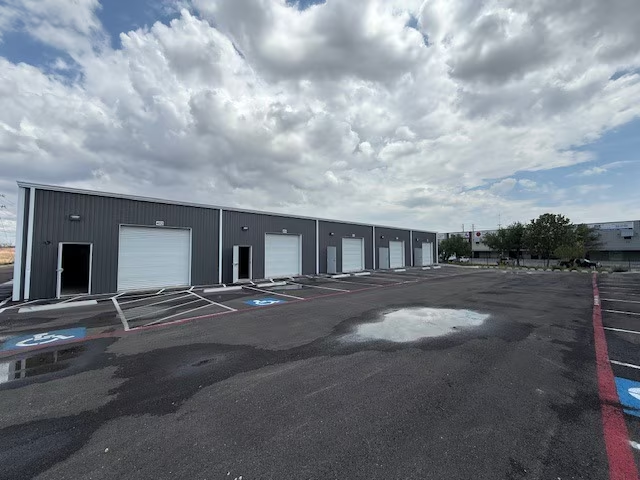
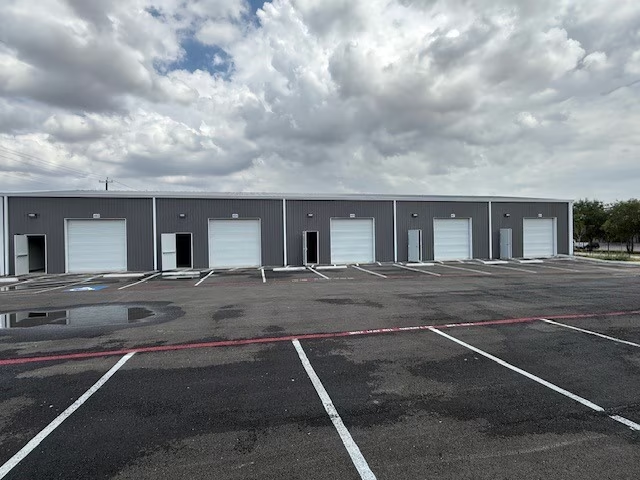
Security State Bank foreclosed on Brooks Business Park (9326 SE Loop 410), a complex of flex warehouses on San Antonio's South Side, via substitute trustee sale on May 5, 2026 (Bexar County Doc# 20260084750, Substitute Trustee Guillermo S. Dekat). The bank purchased the property at auction for $5,157,000. Elder had obtained a $4,945,394 loan from Security State Bank on June 7, 2024 (Deed of Trust, Doc# 20240103528) and kept the proceeds instead of repaying investors as promised. Result: zero return of investor capital. View foreclosure deed (PDF)
§ 09 — Pre-Sentencing Image Rehabilitation
The Ark40 Rebrand
While 345 investors await restitution and Elder awaits federal sentencing (December 16, 2026), his new consulting firm Ark40 Consulting is actively promoting a brand-rehabilitation narrative online — describing the $66 million fraud as "expensive mistakes" and "building and losing a real estate company" without any mention of the guilty plea, the victims, or the $66 million still owed.
After the DJE Texas Management Group scheme collapsed in early 2025, Devin Ward Elder formed Ark40 Consulting (also written as Ark 40 Consulting), a technology advisory firm for nonprofits and small businesses. The firm's name is a deliberate biblical reference to Noah's Ark — framing Elder's post-fraud chapter as a story of survival and rebuilding rather than accountability.
The Ark40 Consulting "About" page features a section titled "A Note on This Work" in which Elder describes himself as someone who "built and lost a real estate company," made "expensive mistakes," and is now channeling those lessons into helping mission-driven organizations. The page omits any reference to the federal criminal case, the 345 defrauded investors, or the $66 million restitution obligation.
The timing is notable: Elder's Ark40 website was live and actively promoting this narrative in the months between his guilty plea (February 17, 2026) and his scheduled sentencing (December 16, 2026) — a period in which defendants and their attorneys often work to shape the court's perception of the defendant's character and rehabilitation.
WHAT ELDER SAYS vs. WHAT HE OMITS
ELDER SAYS
"I've made expensive mistakes and learned from them."
The 'expensive mistakes' were a $66 million wire fraud scheme. 345 investors lost their life savings. Elder pleaded guilty on February 17, 2026.
ELDER SAYS
"I'm working on my second book, a memoir about building and losing a real estate company."
The real estate company was not 'lost' — it was a Ponzi-like scheme. Elder diverted investor funds to personal assets: a 500-acre exotic animal ranch, a camo-painted helicopter, a private jet, and a Gulf Coast beach house.
ELDER SAYS
"Ark40 is the distillation of all of that — helping organizations that are doing something good in the world do it better."
Elder is awaiting federal sentencing for wire fraud carrying up to 20 years. He owes $66 million in restitution. Not one dollar has been paid to victims as of April 2026.
ELDER SAYS
"I'm a person who has built things, broken things, and kept going."
The 'broken things' include the retirement savings of 345 investors, many of them senior citizens, who were promised 8–10% annual returns and received nothing.
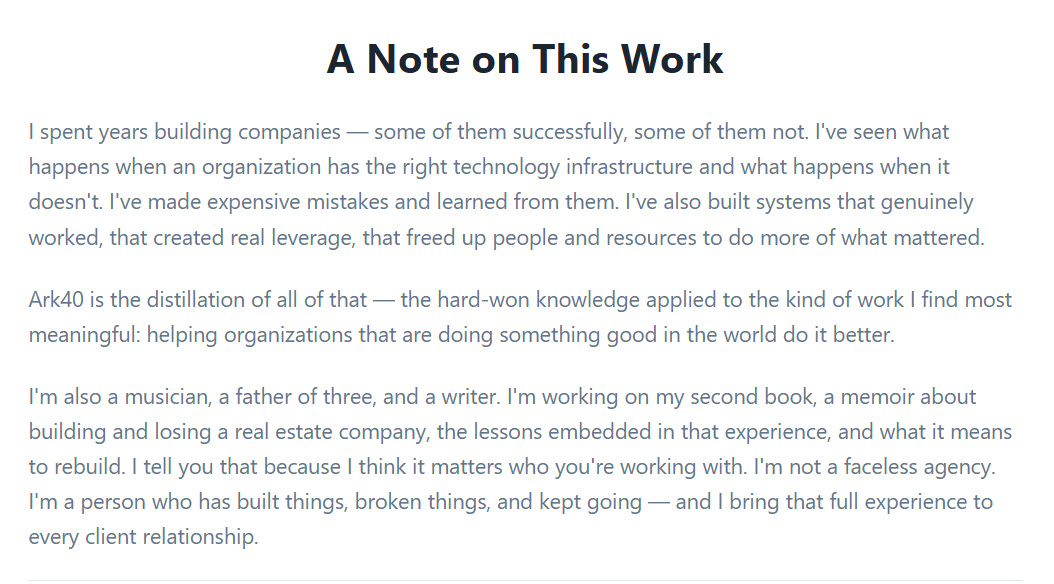
Screenshot: ark40consulting.com/about — captured April 2026. Elder's "A Note on This Work" section describes the $66M fraud as "expensive mistakes."
SENTENCING SCHEDULED
December 16, 2026 · 9:00 AM CT
U.S. District Court, W.D. Texas · Judge Fred Biery
Maximum sentence: 20 years federal prison
The Case File
This site draws on the documents below. Each is the court's own record — OCR'd, text-searchable, and free to download. Start with the plea agreement: it is the case, in Elder's own signature.
Plea Agreement
The guilty plea to one count of wire fraud, the $66 million money judgment, the scheme's mechanics in the government's words — and Elder's agreement to all of it.
Federal Indictment
The original charge: how 17 offerings raised $66 million on false representations, the hidden commingling entity, and the wire transfers that made it federal.
Explanation of Loss
The one-page explanation of how victim losses are calculated for restitution — the arithmetic behind what each investor is owed.
Restitution Brochure
How federal restitution actually works after sentencing: who pays, who collects, in what order, and what victims should expect.
Victim Impact Statement — How to Submit
The official guidance for submitting a statement the judge must consider before sentencing — the one document with a deadline attached.
The Docket
Everything else in the file — court filings, press coverage, the government's release, and Elder's own offering documents — in one feed, newest first, so the latest filing is always on top. Read top to bottom and the story runs in reverse: the sell-off, the plea, the unraveling, the pitch.
Order Confirming Sale of 1512 Wyoming — No Net Proceeds
Judge Biery confirms the sale; proceeds go to closing costs and commissions and then "to partially satisfy the lien of Jefferson Bank" — the first confirmed sale that returns nothing to victims.
Motion to Confirm Sale of 1512 Wyoming Street, Units 1 and 2
The receiver’s $640,000 contract on two condominiums listed at $479,000 each before roof and wall problems surfaced — after the Jefferson Bank lien and closing costs, the government states there will be no net proceeds.
Answer of Garnishee — Bakkt Financial Solutions
Bakkt’s sworn answer to the garnishment: four DJE-entity accounts, all suspended and trade-restricted since July 20, 2026, holding roughly $68,700 in cryptocurrency and cash — nearly all of it in the DJE Texas Management Group account. The filing records Bitcoin withdrawals from two of the accounts in March and May 2025.
Order Resetting Sentencing — December 16, 2026
Judge Biery grants the motion and resets sentencing for December 16, 2026 at 9:00 AM in Courtroom G — 98 days past the original date, against the sixty requested.
Status Report & Unopposed Motion to Continue Sentencing
Elder’s own request for the delay: pending asset sales that would not close before September 9, and sixty more days sought "to maximize restitution to the victims prior to sentencing." The government did not oppose.
Motion to Confirm Sale of 3700 Pitluk (Green Park Venture)
The receiver moves to sell Green Park Venture LLC's Bexar County property to Porter Poultry & Egg Co. — investors put $3 million into the offering; the property listed at $700,000, contracted at $365,000, with roughly $328,000 expected to reach the receiver's escrow.
“Lender seeks receiver for Devin Elder apartment complex”
The unwinding continues — a lender seeks its own receiver for an Elder apartment complex.
Order Confirming Sale of 630 Rocklyn Drive, Windcrest
The court approves the Rocklyn Drive sale — buyer: Big Contracting and Construction LLC.
Motion to Confirm Sale of 210 Fantasia, Bexar County
The smallest sale on the docket — buyer: Big Contracting and Construction LLC.
“South Texas buyer set to acquire two Devin Elder properties for $1.45M”
Two more properties under contract to a single South Texas buyer.
“Horseshoe Bay Resort owner buys foreclosed downtown apartment building”
The foreclosed downtown apartment building finds a buyer.
Motion to Confirm Sale of 4335 Culebra, San Antonio
Filed the same day as the Medina motion — buyer: Brier Village Investment LLC.
Motion to Confirm Sale of Medina Base Property
The motion to confirm the Medina Base sale — buyer: Adryca Construction LLC.
Clerk's Notice of Prejudgment Garnishment (Bakkt)
The government garnishes accounts at Bakkt Trust Company LLC & Bakkt Holdings Inc. before judgment is entered.
Order Confirming Sale of 717 Sunrise Ave., Port Aransas
The court confirms the sale of the Port Aransas beach house — buyer: SCB SA, LLC.
“Devin Elder's last Atascosa County land sells for $569,880”
The last of the Atascosa County land is gone.
Order Confirming Sale of 825 Eventide, Terrell Hills
The court confirms the sale of the Terrell Hills residence — buyer: Lionel & Magda Branscomb.
Substitute Trustee's Deed — Brooks Business Park Foreclosure
The one project actually built is sold at foreclosure by Security State Bank — the largest single price in the record. Bexar County Doc# 20260084750.
“Feds seek approval for South Side foreclosure in Devin Elder's wire fraud case”
The government moves on the South Side business park.
“San Antonio CEO Pleads Guilty to Over $69 Million Investment Fraud Scheme”
The government's official account of the scheme, in its own words — U.S. Attorney's Office, W.D. Texas.
“Feds appoint receiver to offload Devin Elder's seized properties”
A receiver takes over the seized portfolio — the sell-off begins.
“San Antonio entrepreneur agrees to plead guilty to huge real estate fraud”
The plea becomes public the same day the agreement is filed.
Plea Agreement — USA v. Devin Ward ElderKEY DOCUMENT
Elder agrees to plead guilty to one count of wire fraud and to a $66 million money judgment — the case, in his own signature. Case 5:26-cr-00038-FB, 39 pages.
Federal Indictment — USA v. Devin Ward Elder
The original charge: 17 offerings raised $66 million on false representations, moved by interstate wire. Case 5:26-cr-00038-FB, U.S. District Court, W.D. Texas.
“Fifth investor files suit against DJE Texas, alleges misrepresentation”
A fifth investor sues — five days before the plea agreement is filed.
“Luz Roja shutters amid legal troubles for owner Devin Elder”
The River Walk restaurant closes as Elder's legal troubles become the story.
“DJE Texas Management Group hit with more legal action”
The suits multiply — more legal action within the week.
“Real estate firm accuses DJE Texas of fraud and theft in apartment sale”
The first public fraud accusation — a real estate firm's allegations over an apartment sale.
“San Antonio River Walk gets a new Mexican restaurant”
The new restaurant is Elder's Luz Roja — still expanding in public while the fund strained. It closes within the year.
DJE Income Fund I — Offering Memorandum
The later pitch document, issued October 2023.
DJE Income Fund I, LLC — PPM Final
The pitch investors relied on — the confidential Private Placement Memorandum for DJE Income Fund I, effective January 31, 2023, prepared by M&W Law, PLLC. Now evidence.
Explanation of Loss
How victim losses are calculated for restitution — U.S. Department of Justice victim loss documentation.
Restitution Brochure
How federal restitution works after sentencing: who pays, who collects, in what order — U.S. Department of Justice victim restitution guide.
Information About Victim Impact Statements
Guidance for the statement the judge must consider before sentencing — deadline before the December 16, 2026 sentencing. U.S. Department of Justice victim resources.